Paga Community School

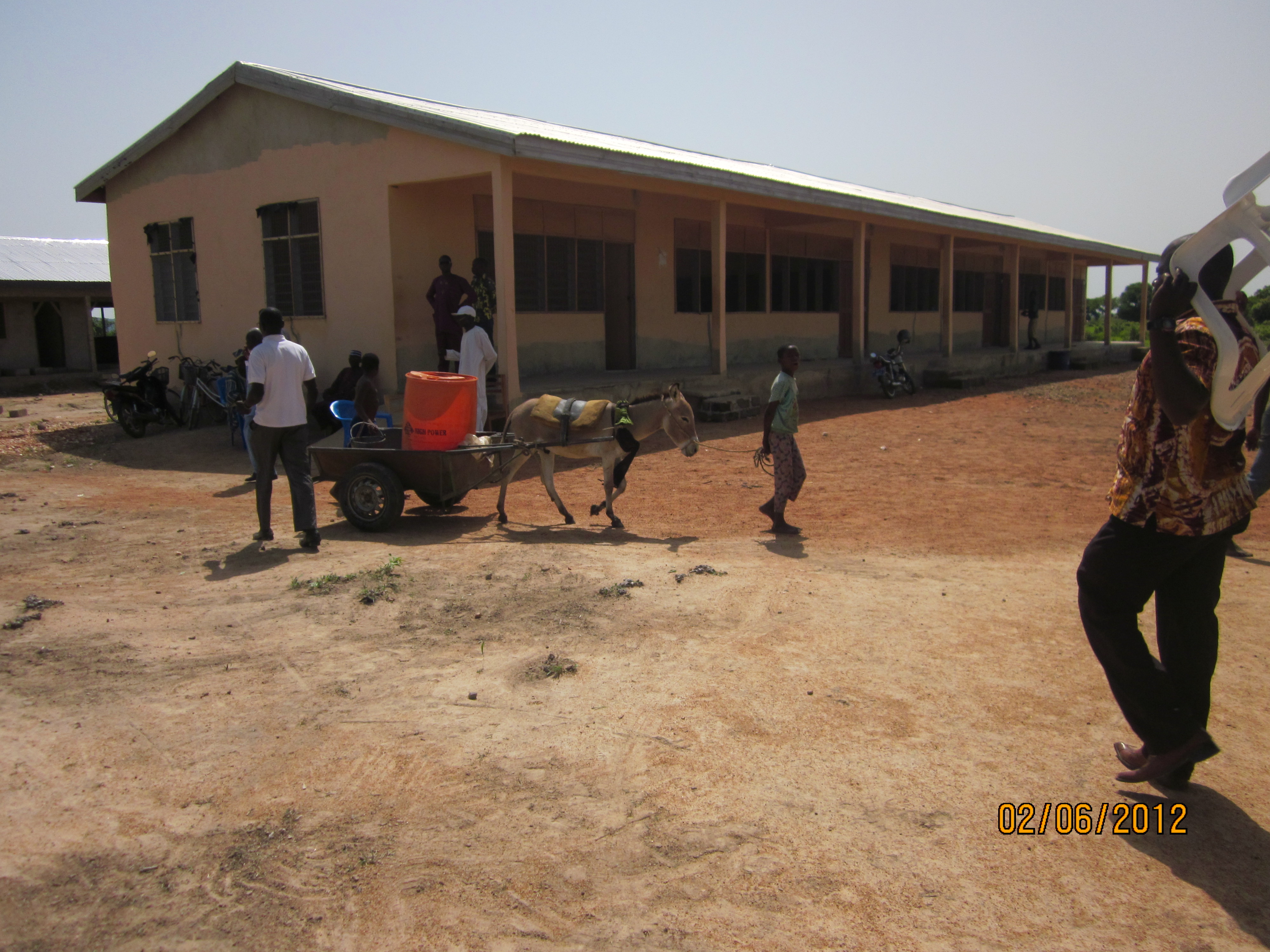
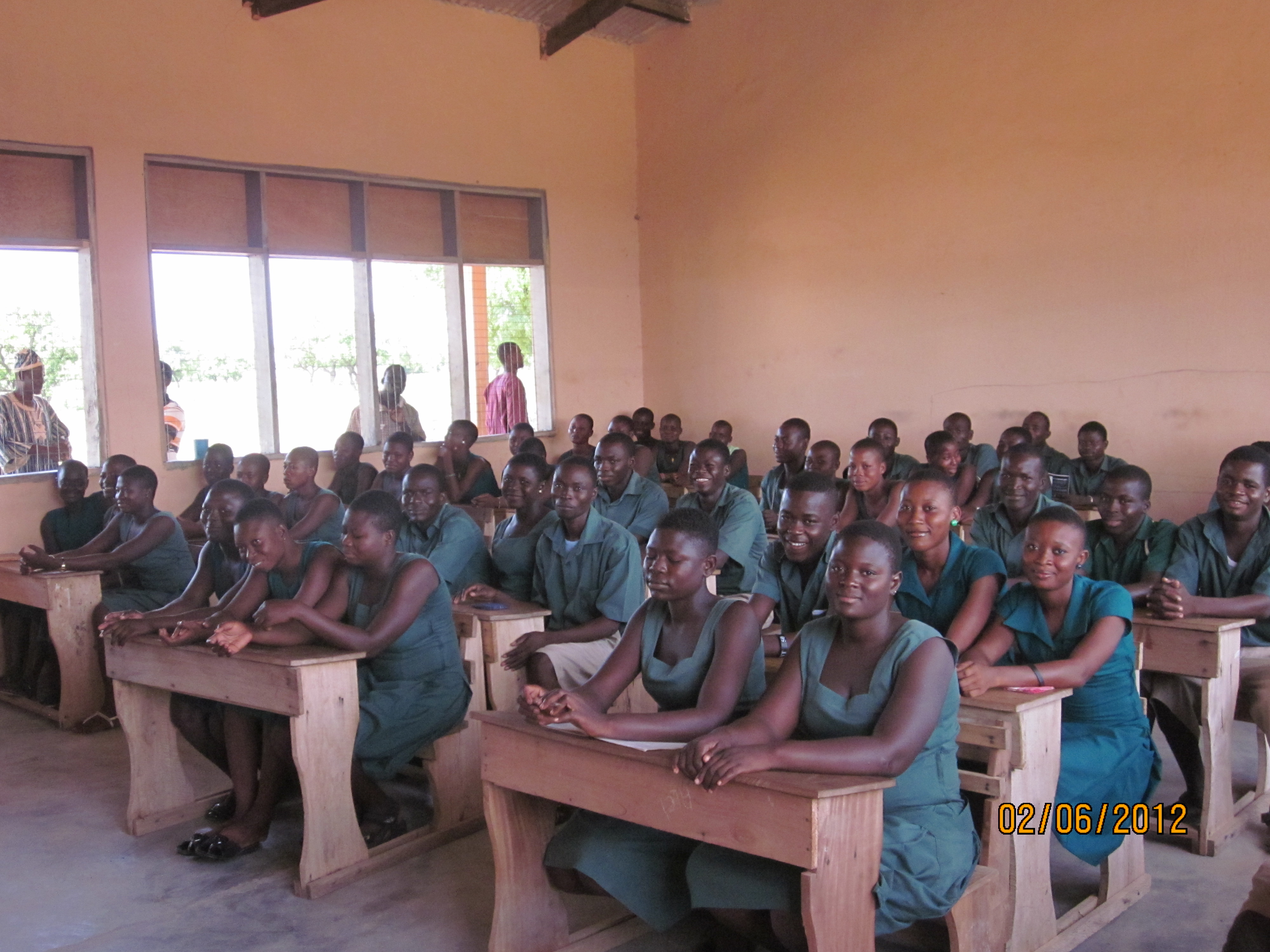
Impressively, this Upper Eastern Region community has built a senior secondary school just outside Paga, the border town on the road to Burkina Faso.  They have finished the first teaching block, which is in use for SHS 1 and 2 classes, and are in the process of building another block.  The hope is to construct a girls’ dormitory block so that girls do not have to walk the 2km to and from town each day.  The GSA grants will go to building a well (drilling a bore hole) for clean water for the school.

The pictures show (1) a full classroom and (2) a helpful donkey on the site.

pupils in class Paga Com SHS Paga Community SHS teaching block

Update:  Thomas Nabonadam, Assistant Field Securty Officer, Abidjan, has emailed to say that the GSA grant has been received by the school and they are proceeding with arrangements to drill the borehole.

Tampei and Kukuo villages near Tamale

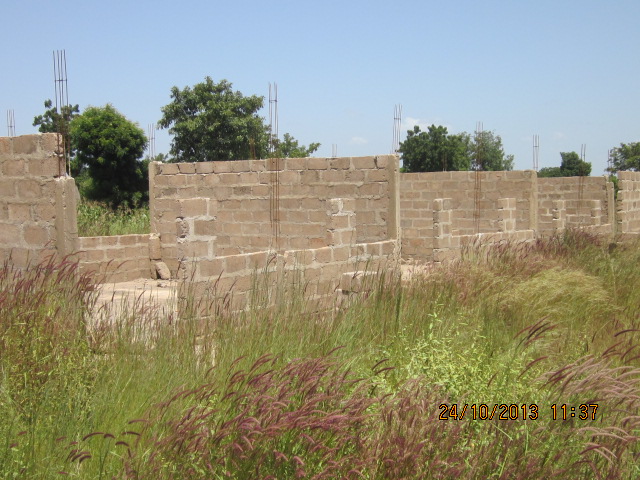
The organisation involved in the application to GSA is Cooperation for Integrated Development Ghana (CID-Ghana) located in Tamale.  They are assisting the local community in building a primary school block for the two rural communities, Tampei Kuduo and Kukuo Yapalsi.  In the application Frank Dugasseh said:  This is the work already completed: (1) Built the foundation to the floor level concrete; (2) Moulded over 6000 blocks for the superstructure; (3) Purchased two trips of aggretate sand.This is the work still needing to be done:  (1) Build the superstructure walls and roof; (2) Plaster and paint.The GSA representative, Baako, has visited the project and given a very positive report of progress.  The report has triggered the release of the second grant installment of £500 from GSA.

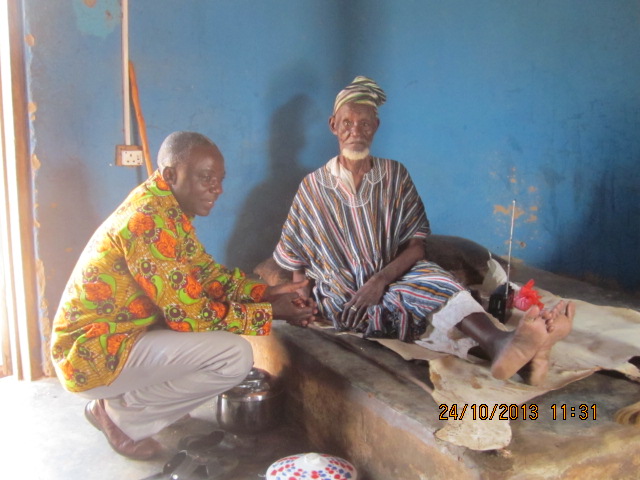
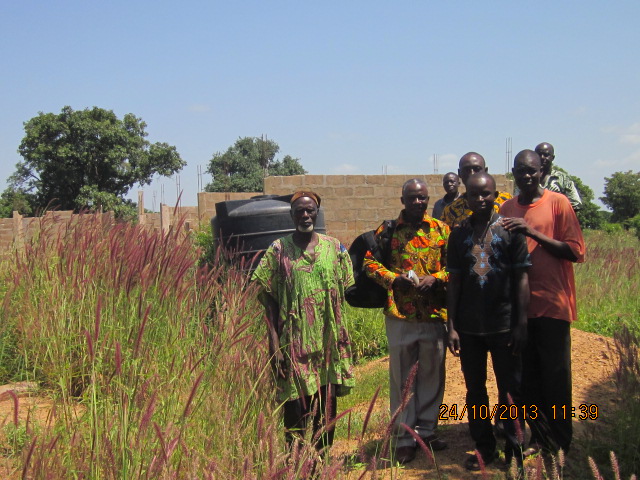
UPDATE    Baako visited Tapeil Kukuo on behalf of GSA on 24th October 2013.  He was met at the chief’s palace by the project committee of 8 men and 2 women (2 other women members were absent).  The chairman stated that though they had started the school in a very small way, today they were proud of the type of school they were building with the help of organisations such as GSA, so that their children would have a decent school to attend.  Baako continues:  “After the meeting they took me to the chief and briefed him on our meeting.  He thanked me for coming and presented some cola nuts as a sign of appreciation in accordance with the tradition.  (See picture below.)  After that we went to the project site and I took pictures from different angles.  Indeed, there is still much to be done on the building.  The meeting came to an end at approximately 12.10pm with the promise that I would let my report report reach GSA.”

IMG_2790 IMG_2792 IMG_2794

WECHIAU COMMUNITY LIBRARY

In 2012 GSA sent a grant of £500 for the purchase of books for the Wechiau mobile library project.  Frank Dugasseh sent his thanks and greetings for 2013 with an update on the project and a picture.  Wechiau is in the Upper West Region, on the border with Ivory Coast.  The Black Volta River runs nearby and Wechiau is well-known for its Hippo sanctuary and its many bird species.

New Year Wishes

UPDATE MARCH 2013  The plan to make the library mobile has proved too costly, but the GSA grant has enabled the purchase of a wide range of fiction, some classical, some modern, including many by Ghanaian authors.  The Community Library is clearly a vibrant organisation.  It organised a regional spelling bee for schools, which included a partially-sighted contestant who came in 8th!

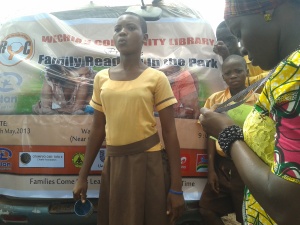
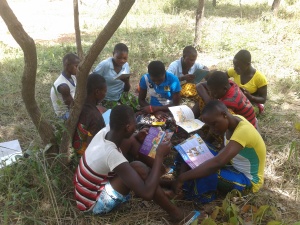
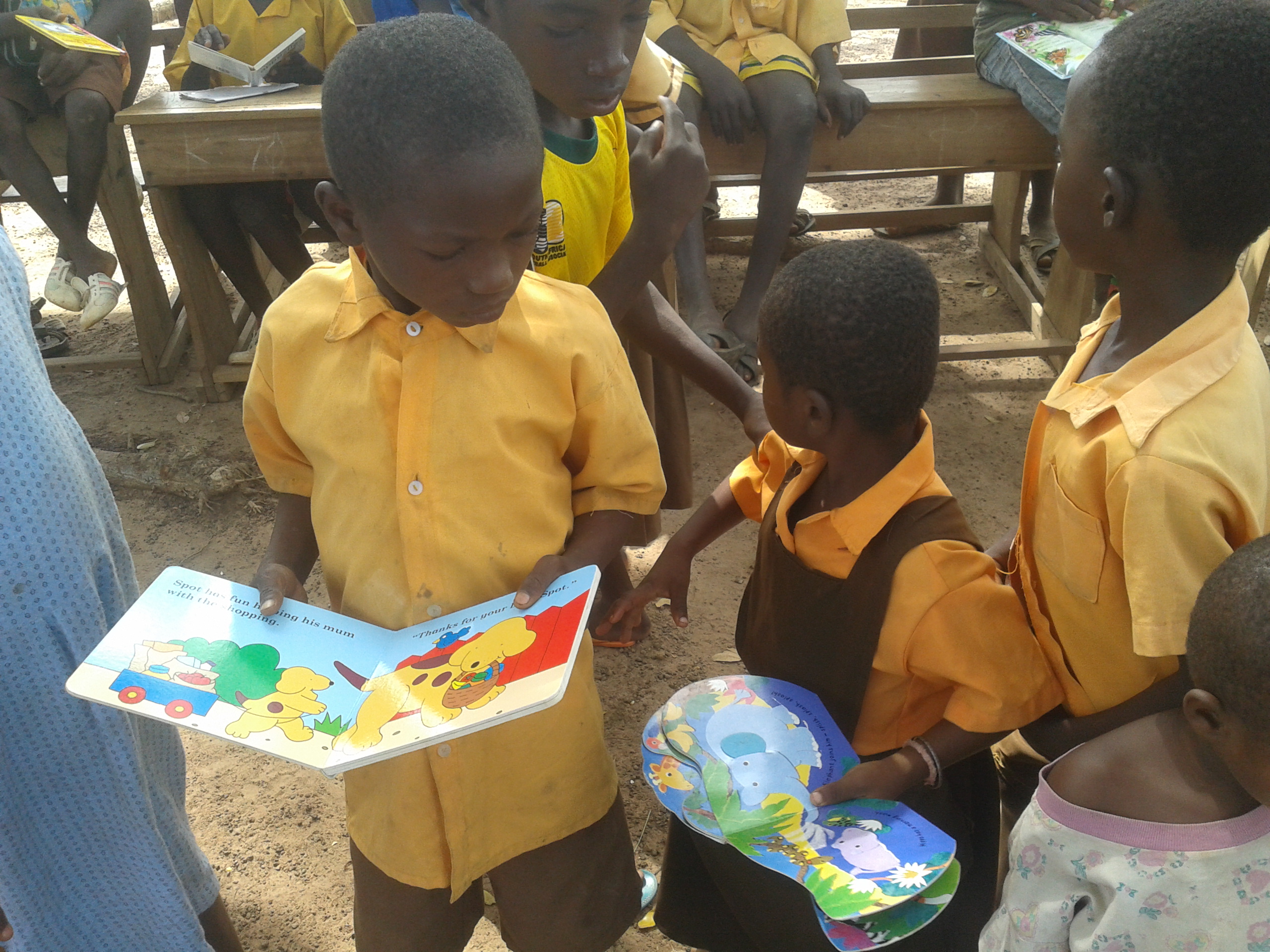
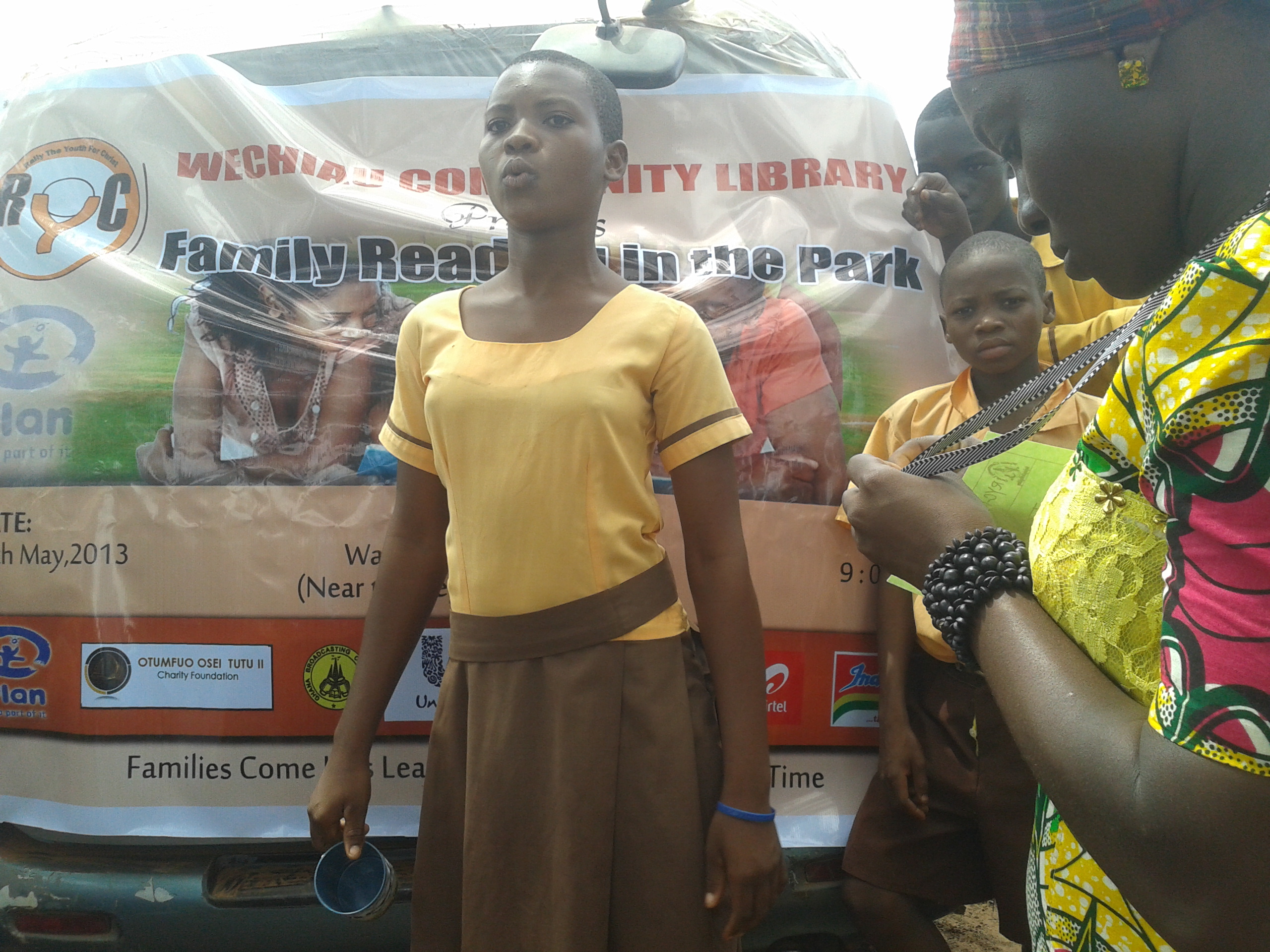
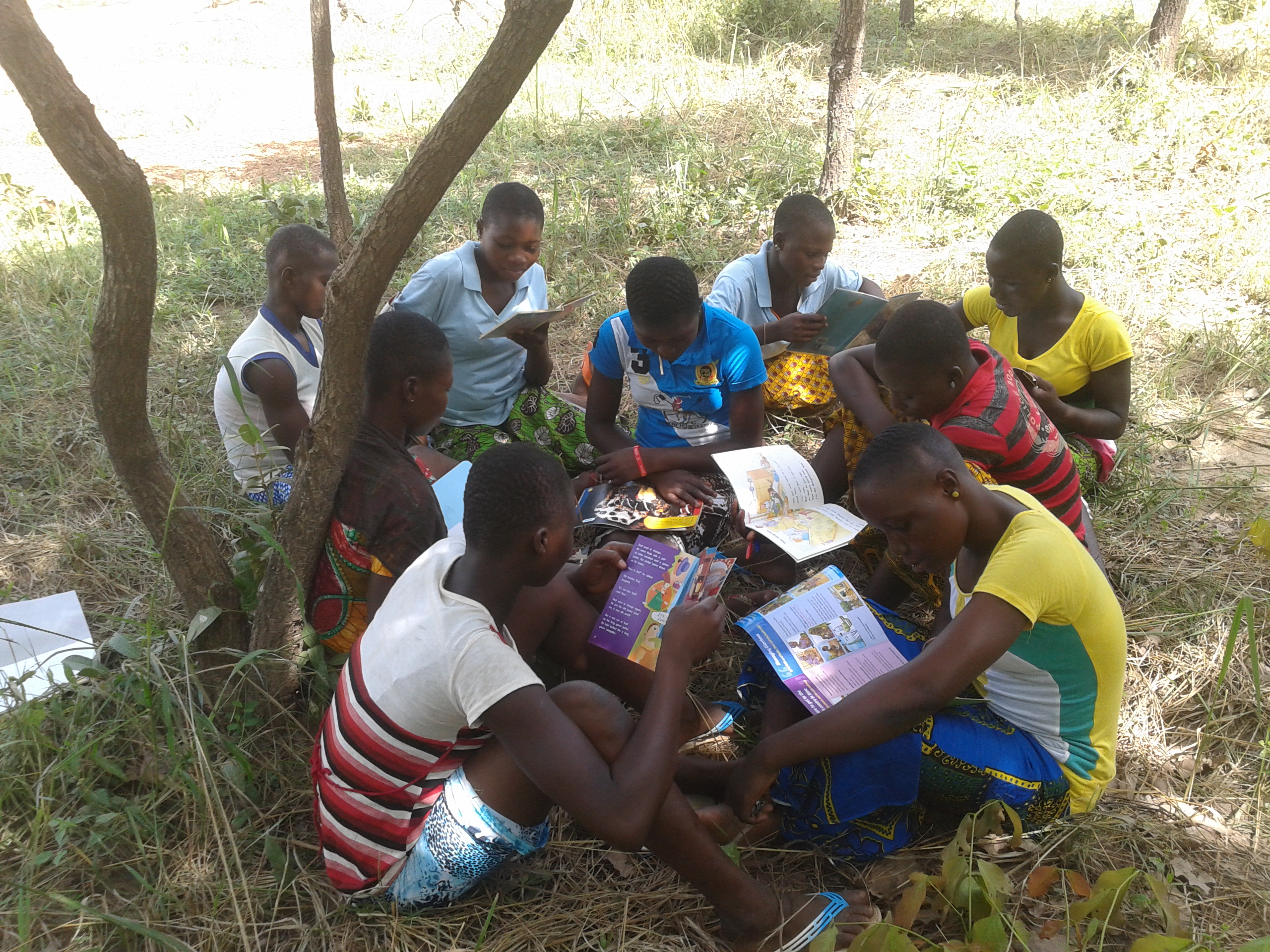
UPDATE  JAN 2014   Frank reports:  “We organised an event in two rural communities called LET EVERY COMMUNITY READ .  For over 6 hours, close to 500 children and some parents came reading.  They picked any material within their level and sat anywhere to read.  It was a really thrilling experience.”  Below are some pictures of some of the participants.
2013-10-19 10.05.162013-10-19 11.26.272013-10-19 13.37.12

UPDATE MARCH 2016  Wechiau Community Library is the first ever Fixed and Mobile Library Service provider in Ghana. It was started by Frank Akowuge Dugasseh as a means of reducing illiteracy in the Upper West Region because less than 9% of children in primary schools can read and understand whilst 73.4 % of the population aged 15 years or older is not literate in any language.  Frank started the Mobile Library Service (MLS) in Ghana with 5 old story books on a bicycle during his National Service in 2007, with funding coming from his National Service allowance.  Currently, the library serves over 800 children including the visually impaired, through its fixed and Mobile Library Service.  Reading materials are sent to individuals and schools in deprived communities to use and later replaced. Wechiau Community Library has also started distributing limited solar lamps to deprived children in rural communities to aid their studies at night.  

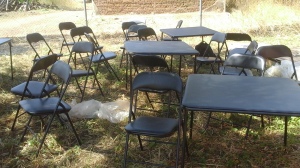
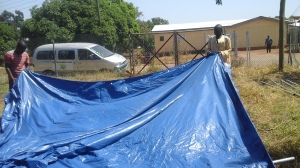
In September 2015, GSA sent £1000 to purchase a canopy to protect the mobile library from the elements, buy chairs, and repaint the HQ.
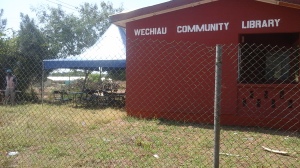
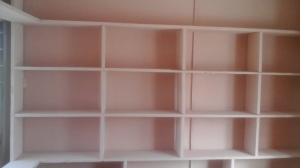
CanopyInterior of LibrarySome of the chairs and tablelaying out

This is the canopy.  Note the Wechiau Library van in the background!

UPDATE  February 2017.  The local authority has decided to open a library near to the Wechiau library!  Frank Dugasseh has such a good record of answering community needs (and answering our questions!) that GSA looked favourably on his wish to move his operation 38 km away, to Poyentanga.  We awarded a grant of £1800 to help him restart his library and community centre afresh where it is most needed.
ABIRIW ROAD SAFETY PROJECT

In 2009 a substantial grant was sent to a registered NGO in Ghana called FOCUS ON YOUR STRENGTHS (FOYS) which aimed to enrich the lives of young people and mature women in Abiriw-Akuapem, through projects, sharing information and collaborative effort.  The grant was made up of £3000 donated by the Morel Trust, UK, and £750 from GSA, and the project involved road safety intiatives with particular reference to school-age children in Ghana.

FISHING VILLAGES PROJECT

GSA Project 2005:  SCHOOLS ON THE FISHING COAST LINE (SFCL).  This project was aimed at assisting ten Ghanaian basic schools (Primary and JSS) located on the coastline stretching from the Half Assini area in the Western Region to Aflao in the Volta Region.  The intention was to improve facilities for learning and teaching in the schools as well as for sports/games, and also for music and dance in order to enliven the school atmosphere and thereby encourage the children to attend school regularly without dropping out prematurely to join their fishing parents.  The project was also meant to induce the children to remain at home in their local communities with their parents without falling prey to monetary inducements offered to them and their parents by some unscrupulous child traffickers who would take the children away for employment and other pursuits up country, especially along the Volta River.

Various Ghana Government efforts to return these unfortunate children to their home communities were in place in Ghana at the time.  Some NGOs were also assisting.  The GSA project therefore fell in line with contemporary Governement and other rescue interventions on behalf of the children in these coastal fishing villages.

Ten schools were selected, as follows:  Salvation international JSS, Kengen; Dixcove Methodist JSS; Moree Catholic Primary;  Mountford Catholic Primary A & B;  Arkra District Assembly (DA) JSS;  Old Ningo Presbyterian Primary;  Lolonya DA Primary;  Kpone Methodist Primary;  Woe-Aklorbordzi DA Primary;  Adina Ame Zion Primary.

The GSA budget allocated was £3500, at the rate of £350 per school.  The project was administered by Michael Asiedu, the GSA representative in Ghana at the time.  Michael reported that the Heads of School and their District Directors of Education were very appreciative of the support given, and letters of acknowledgement were sent to GSA.

DEG CHILD FOUNDATION

Here are the first two paragraphs from a document dated 2002.

“This region is about 300km from the coast, near the Cote d’Ivoire border (…).  The population, about 40 000, call themselves the Dega in their own language (which has only recently been put into writing by Wycliffe).  Many also speak the national language, Twi, in which they are called Mo.  The two names are often run together to form “MoDega”.  There seems to have been little attention to the area by the state or outside agencies.

The land is of savannah type, not very fertile.  There are around 45 villages, with mainly mud-brick thatched houses, no electricity, and only some with a well or water-catchment reservoir.  The people are mostly subsistence farmers, growing yams, cassava, maize, shea nuts, etc.  There is also river fishing, animal husbandry (goats, some pigs and cattle), and traditional crafts such as pottery and weaving.  Many families rely on support from members working elsewhere.  There is widespread malnutrition and high (15%) infant mortablity, with some incidence of HIV/AIDS.”

The Deg Child Foundation was created as a result of the tireless work of concerned Ghanaians residing in that area, who wished to help as many orphans as possible, arranging care, sponsorship and vocational training.  Letters of appreciation show what a difference their help made.  In 2001-2 GSA sent a substantial donation to the Deg Child Foundation.