Wulugu Project

The Wulugu Project works to reduce poverty through education in a deprived area of Northern Ghana.  It began with a chance meeting in 1993 between a Headteacher from that area and Lynne Symonds from Norfolk.  Lynne raised funds to equip Wulugu Secondary School, giving the charity its name.  Since then the Wulugu Project has built and equipped new schools, provided hostels for teachers and girls and given small start-up loans so mothers can earn money to support their children’s education.  Over 200 000 children have been helped;  over 9 primary schools have been built and equipped and over 30 have had desks provided or repaired.  The Wulugu Project has also built and equipped 4 vocationals schools for girls.  It is charity No. 1060691 and has its own website.  Ghana School Aid has been happy support it on several occasions.

UPDATE May 2017  GSA received an application from the Wulugu Project and chose to send £800 to purchase Tie and Dye materials for use at Sawla Vocational School.  We hope to receive a report at the 2017 AGM.

Cambridge-Bethel Primary School

On 2nd August, Patience writes:

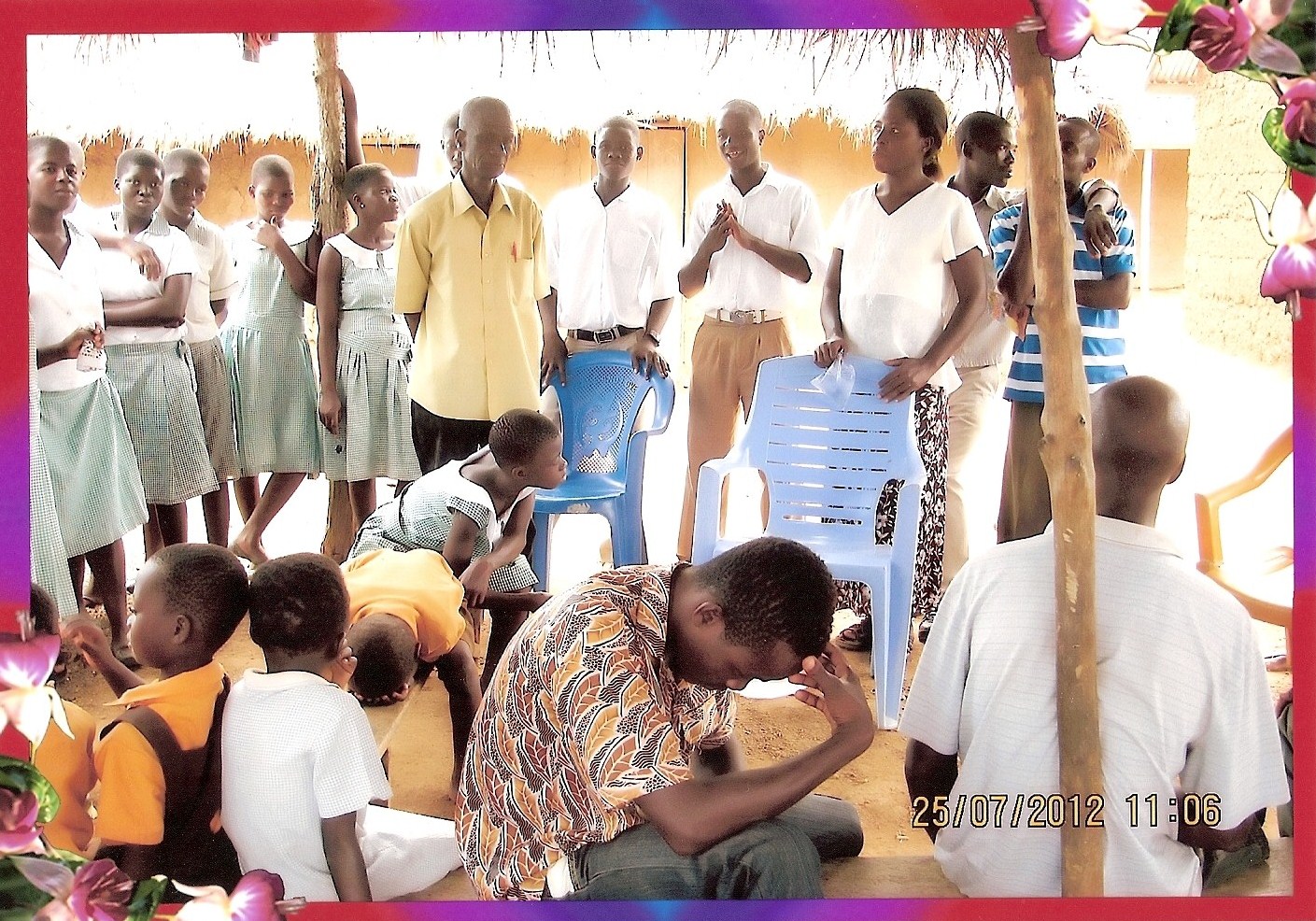
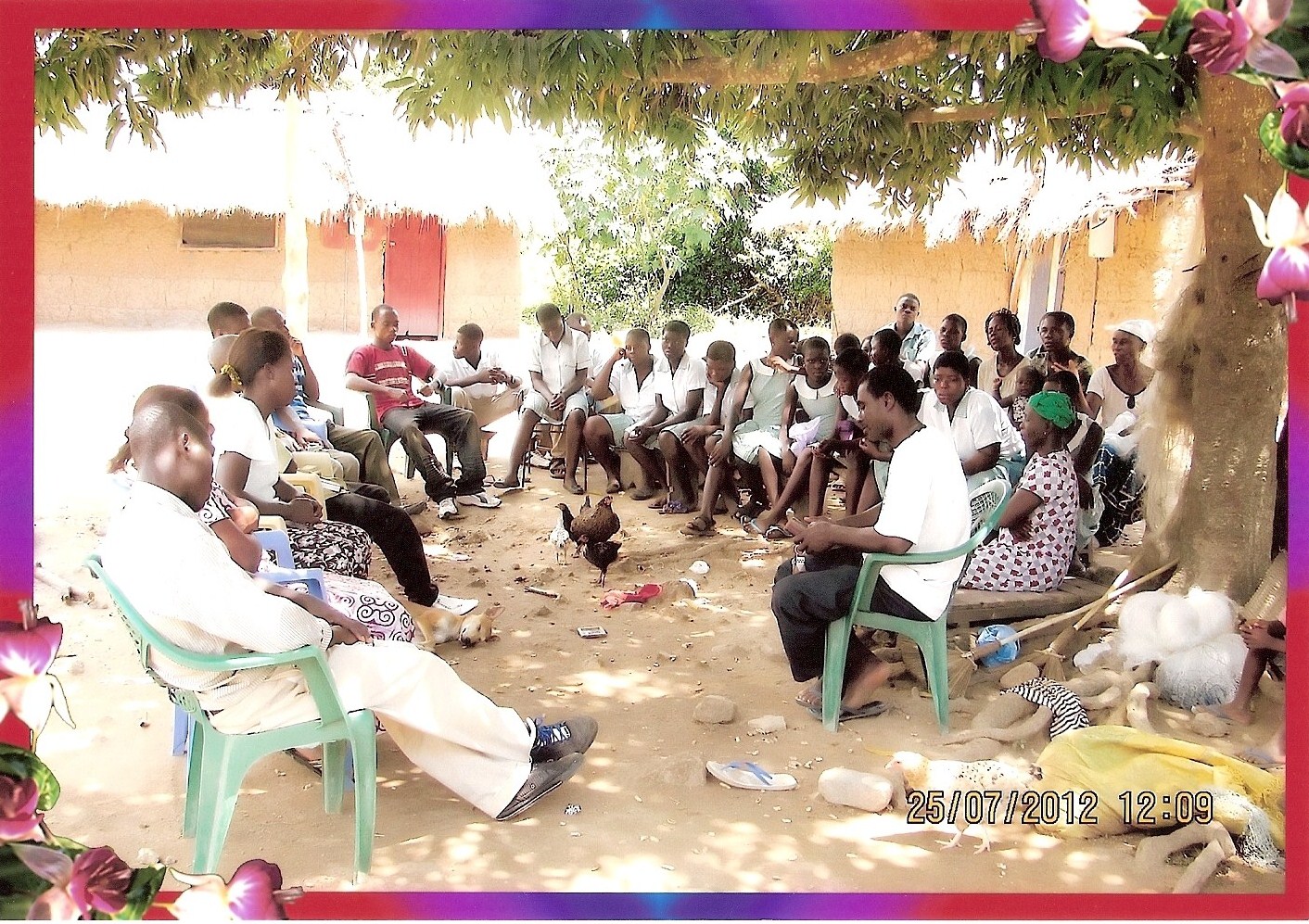
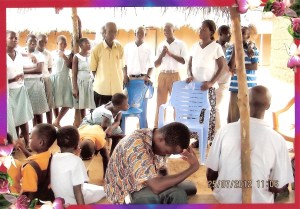
Our school vacates today and will reopen on 11th September 2012. The Headmaster, teachers and some of the students and I went on an educational tour in nearby villages, talking to parents about their girls.

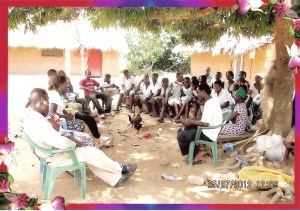
Many girls get pregnant at school-going age. We encourage parents to care for the babies in order to enable their daughters to continue with their education. In fact, this was door-to-door talking. It was very tiring but I enjoyed it for it was worth it. People told us their worries and were happy we came to educate them. [See pictures, ed]

Please, one thing we request from you with humility, that you help us with furniture in the JSS. Next academic term we’ll have JSS2 and JSS3. Thank you very much.

We wish you all the best in your work. Please, our regards to GSA and all the family.
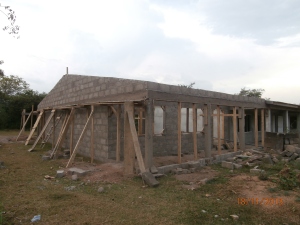
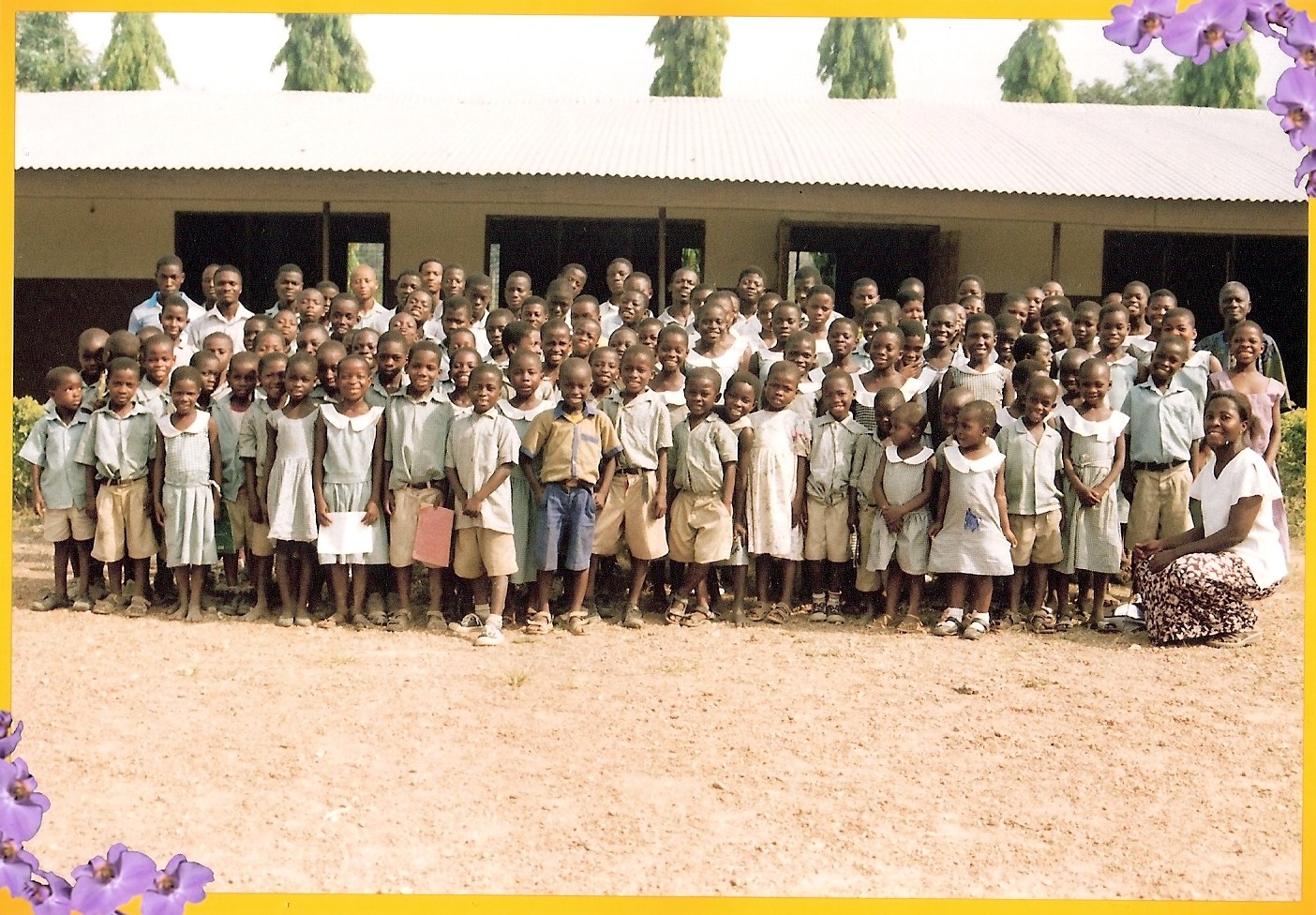
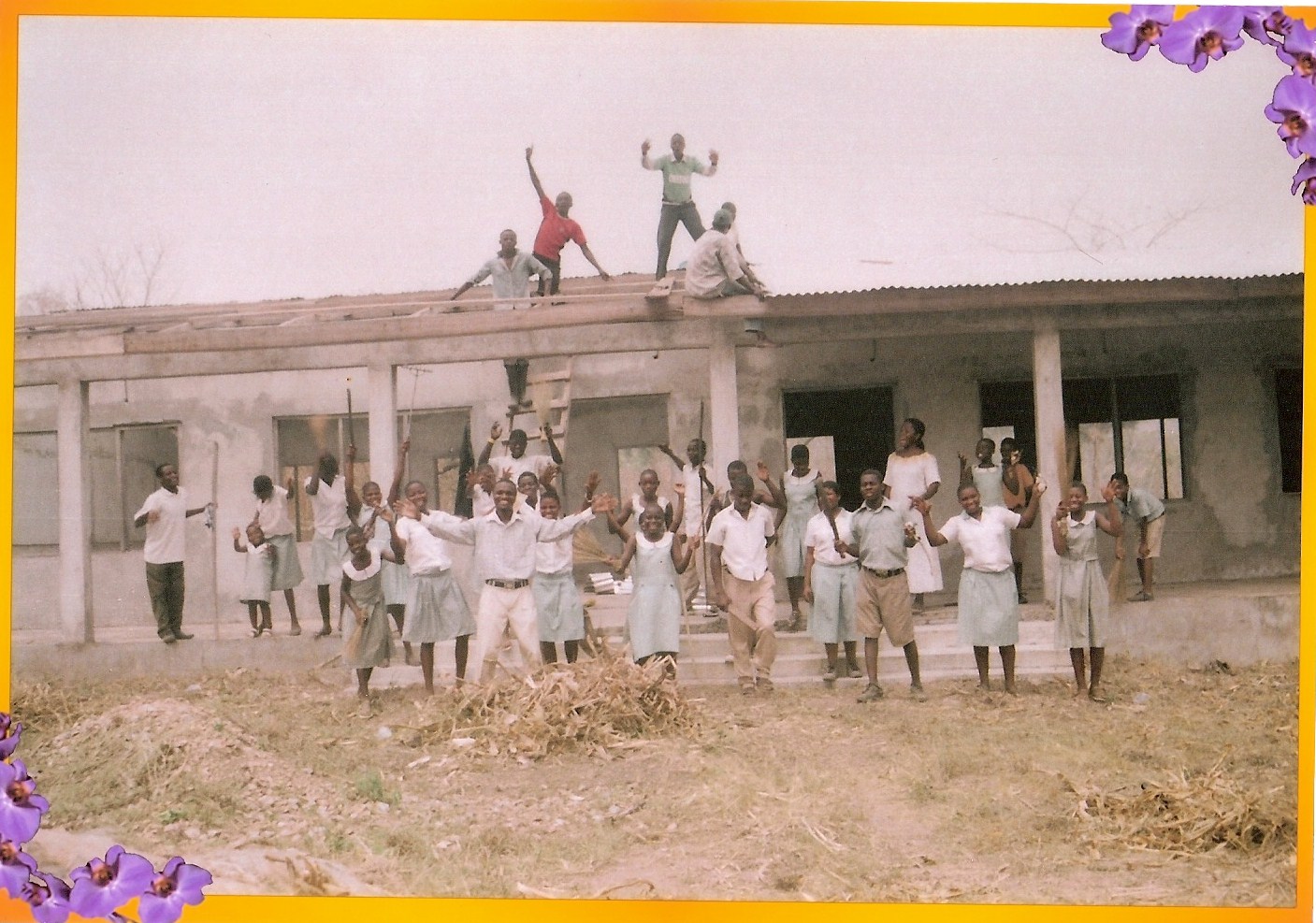
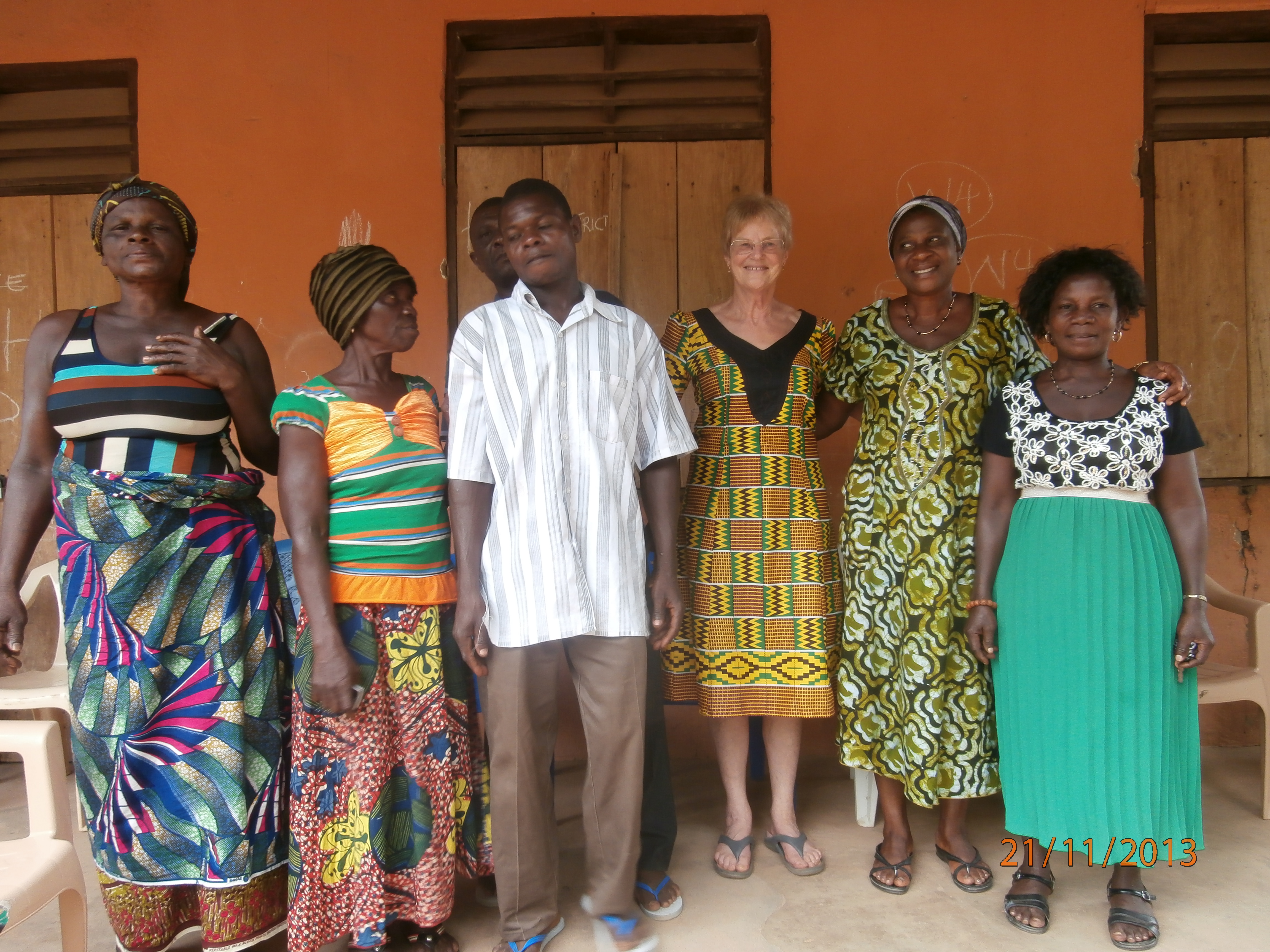
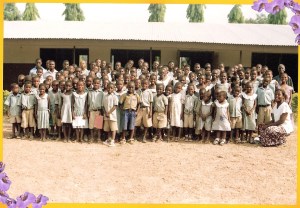
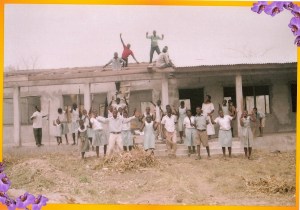
This school was founded as a private venture by Patience Agbeti, in a gesture of goodwill to the village (Bethel-Awudome) where her late sister was cared for. Patience receives some funding from a church in the USA, but just keeping afloat is a real struggle.  She employs 11 student teachers.  They teach 140 children whose parents also struggle to pay the fees.  The children sit the normal school leaving examinations.  Patience chose the name “Cambridge-Bethel” in order that people should associate the excellence of Cambridge with her school.  Funds were sent in 2012 both from Ghana School Aid and the J.Bedu Memorial Fund to enable her to complete her Junior High School block.  This she has done, and thus relieved overcrowding in existing classrooms which had been subdivided.  The pictures show a school photo, with Patience on the extreme right, and work in progress on the classroom block.
UPDATE  JAN 2014   Penny visited the school in November 2013, and reports:  I am happy to report a happy and enthusiastic ethos in the school.  It is small enough for personal attention to be given to each child and the leadership qualities shown by Patience and her Headteacher, Mr. Okra, a teacher now in retirement, are excellent.  I particularly appreciated the interest shown in the world outside immediate school matters, such as the implications of the new trunk road, developments in education, issues of gender equality, emphasis on being able to communicate effectively with visitors from abroad, interest in mental and sexual health…

Pupils who live far away from the school stay in a hostel made available by the owner.  It is very basic, with one room for the girls and one for the boys and most children sleeping on mats on the floor.  The boarders look after themselves:  they do their own cooking and hygiene, and the very young ones are cared for by the older ones.  This is an education in itself.  They are doing well, and Patience valiantly supplies constant emotional and practical support.

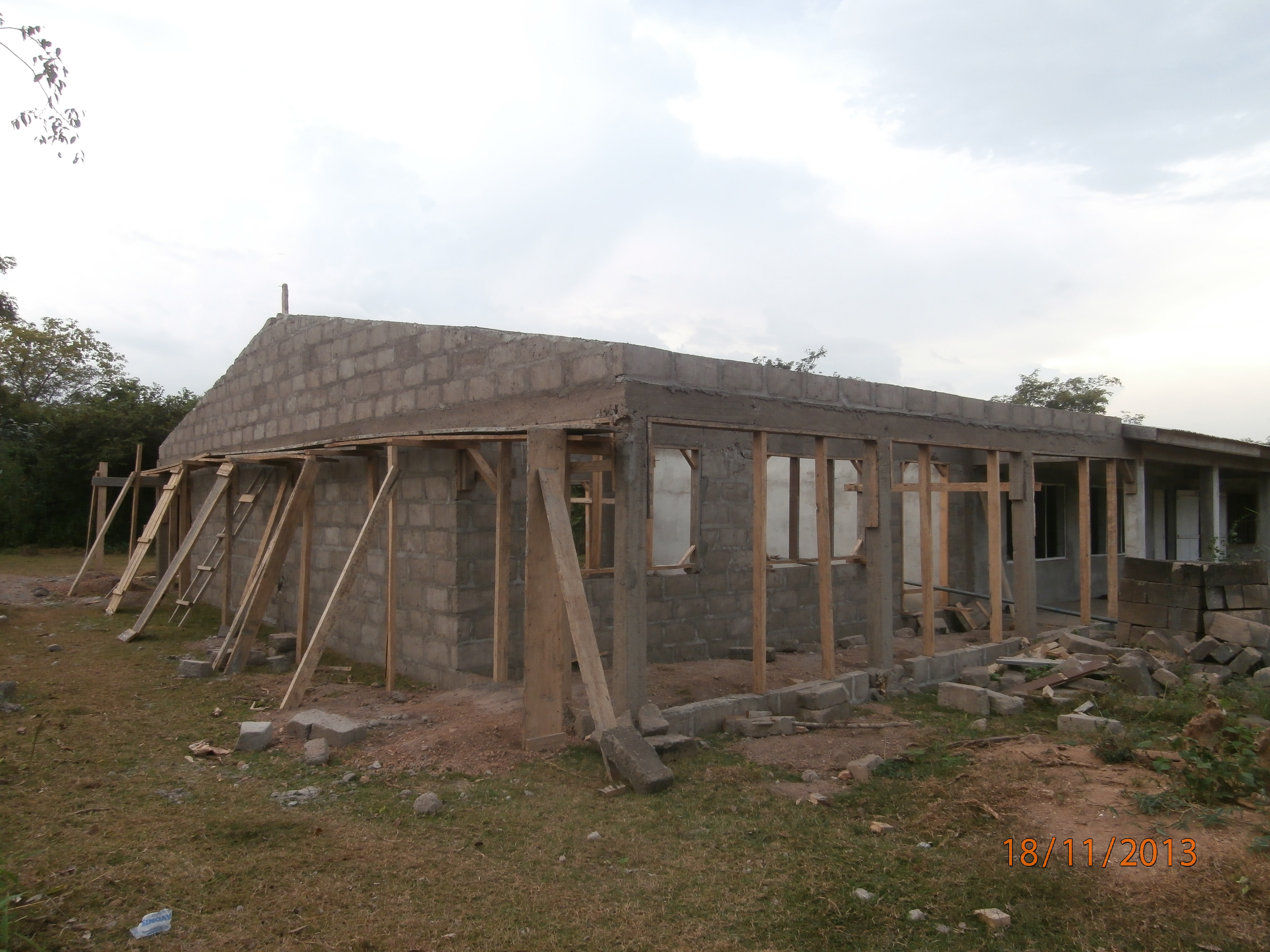
A building housing two new classrooms had been built away from the Primary building, and the grant received via GSA of £4000 in memory of Pamela Lewis is bieng used, as intended, to complete the third classroom.  The pictures show that roof, floor and window and door frames are still to be completed.  The pupils are contributing much to the building project:  they cleared the land and did some of the labouring work.  The teachers are energetic and well-motivated and inspire a serious, focused attitude in their students.

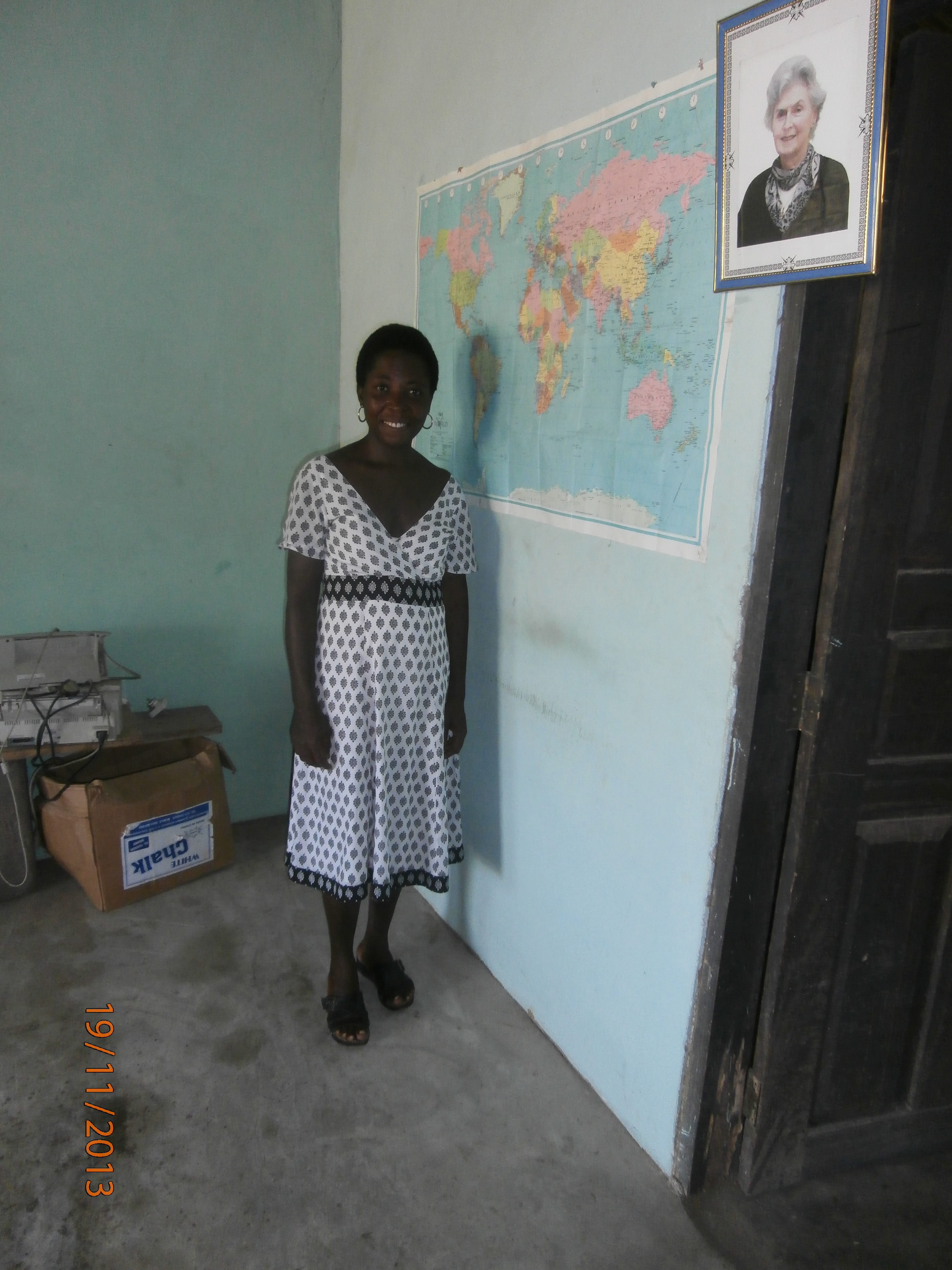
I took a portrait on canvas of Pamela Lewis, which is now framed and hangs in the school office.  I feel that students in the school are getting exceptional opportunities for developing their curiosity and understanding of the outside world and their position in it.  I really enjoyed the dance, recitation and acting display they put on for me.  I left gifts of library story books, 2 footballs, pens and pencils, a small cash gift for the teachers and a little money for the new classroom.
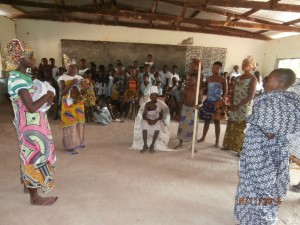
OLYMPUS DIGITAL CAMERA

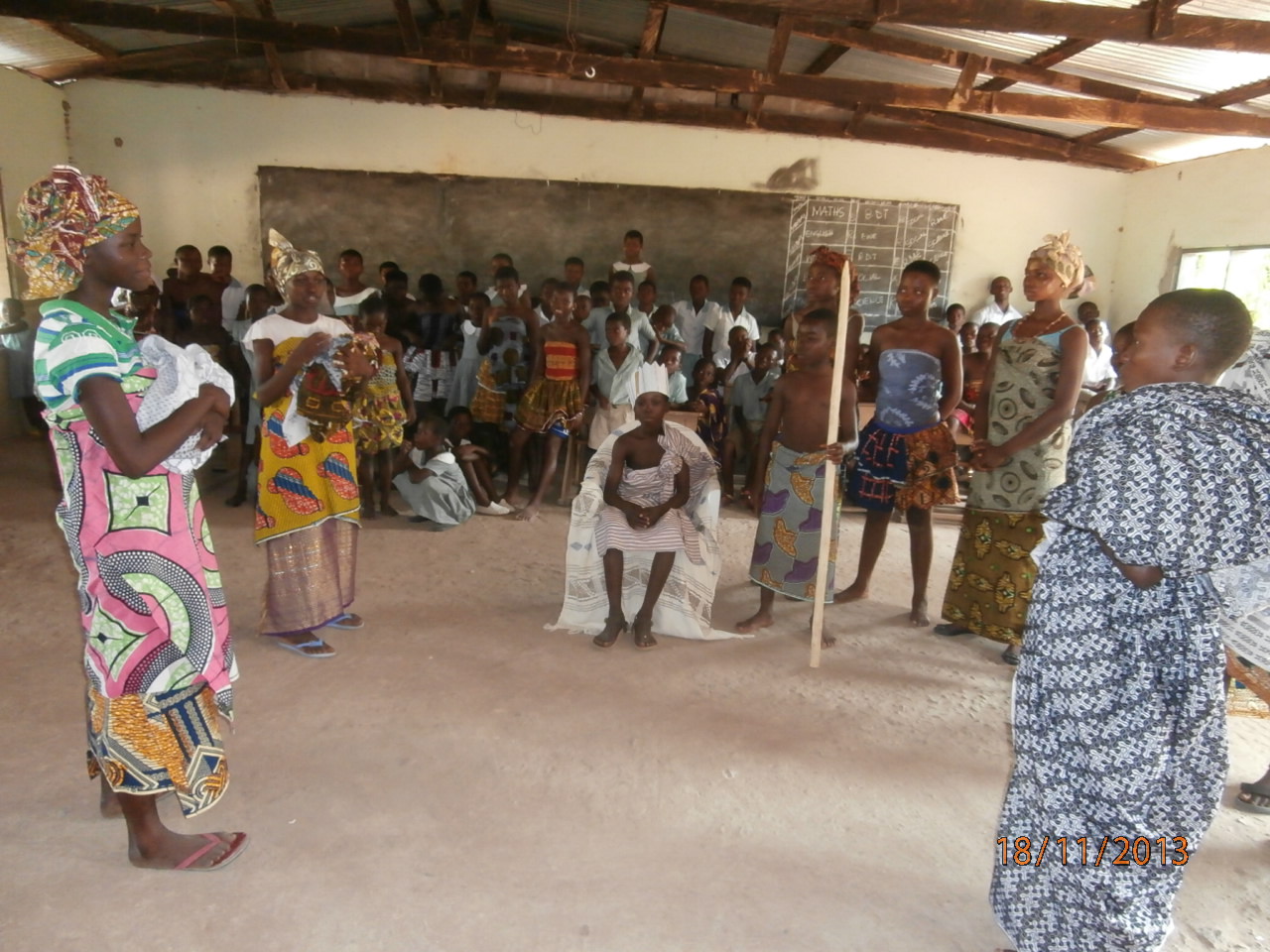
A play about king Solomon dispensing justice
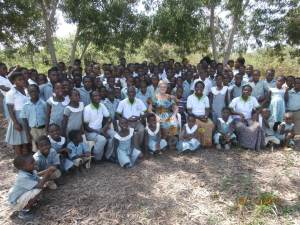
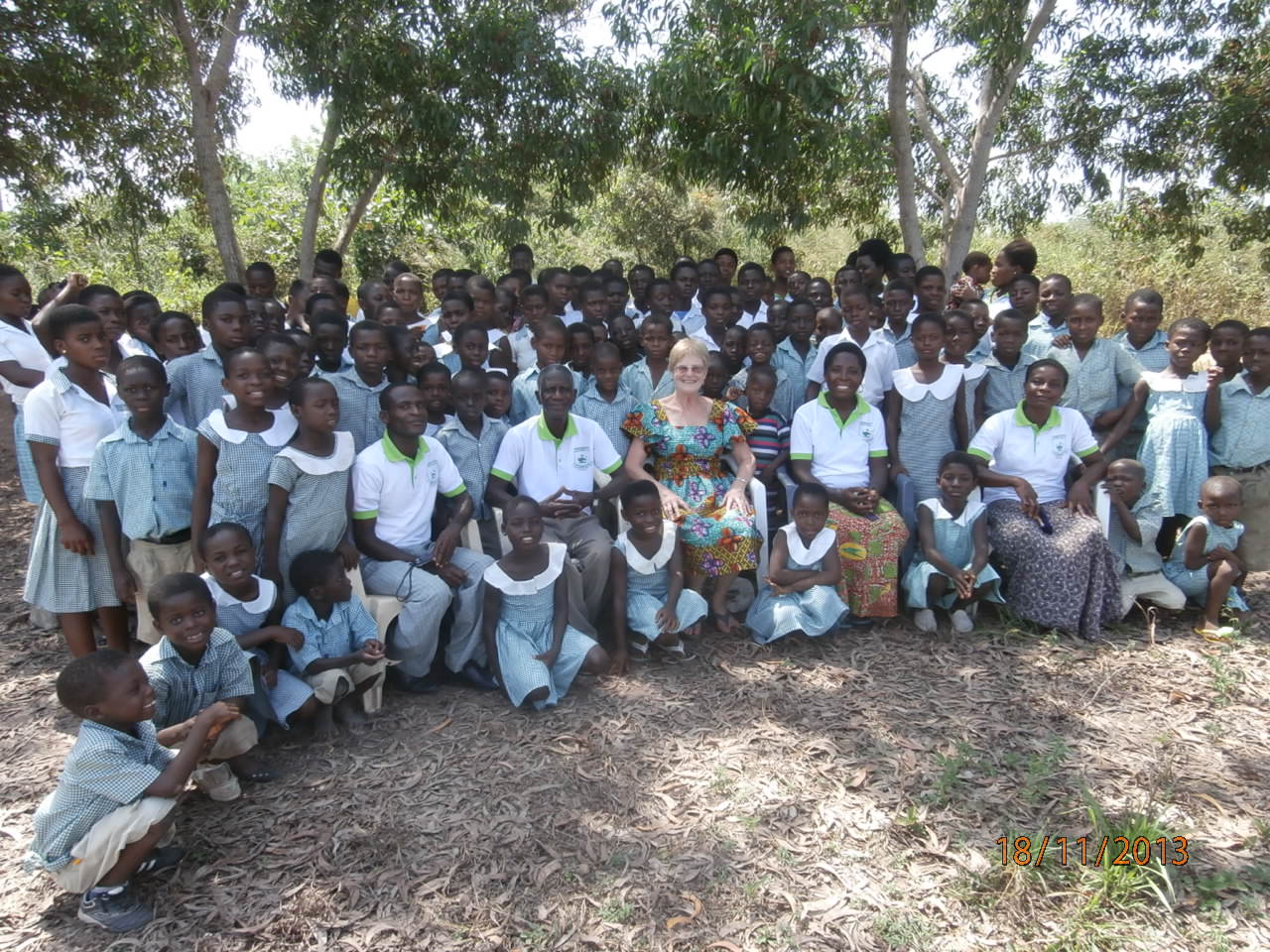
OLYMPUS DIGITAL CAMERAA school photograph

OLYMPUS DIGITAL CAMERA

The Pamela Lewis classroom in November 2013
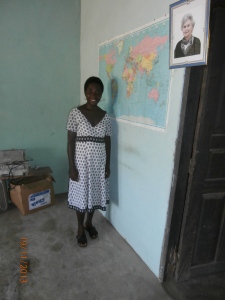
OLYMPUS DIGITAL CAMERA

Patience with Pamela Lewis’s portrait

UPDATE MARCH 2016  Thanks to the generosity of a single GSA supporter, we were able to send enough money to buy 34 desks for the Junior High School (see pictures below), 15 stools for the kindergarten and renew window screens both in the school office and at the school hostel.  In July 2015, Patience wrote, “Our hearts are filled with joy to say a Big Thank You to GSA and our dear sponsor.”   In February 2016, GSA agreed that money raised at the funeral of Pamela Lewis’s brother, Graham, should be sent to Cambridge-Bethel so that Patience can finish off plastering a wall of the Pamela Lewis classroom and getting a portrait of Pamela painted on to it. Our grateful thanks to the Lewis family who made this possible.
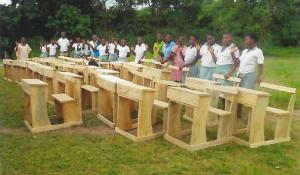
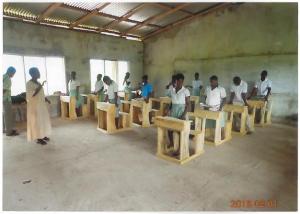
Cambridge Bethel new desks

Cambridge Bethel new desks

UPDATE  February 2017  With the support of GSA who made it their 30th Anniversary Appeal, Penny launched an appeal to supporters of the J.Bedu Memorial Fund to raise £5000 to help both the Cambridge-Bethel School and the J.Bedu LA Primary School.  Cambridge-Bethel now has a 4-cubicle KVIP toilet block situated near its Junior High classrooms.  The project was completed quickly and within budget, so thank you so much to all financial supporters, builders, supervisor Grace and pupils for their generosity and hard work.  The KVIPs will make a huge difference to the pupils.

 

Nyogbare Primary School

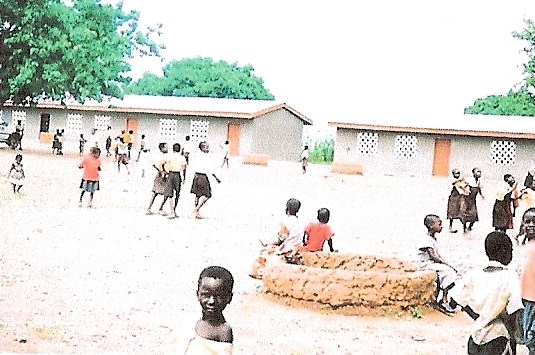
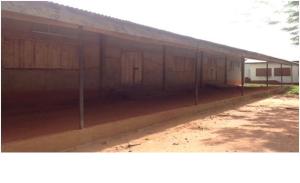
Nyogbare Primary School, in the Talensi-Nabdam district of Upper East Region, is linked to Southfields Primary School in inner-city Coventry.  Nyogbare is in a remote area where most families live by subsistence farming.  In 2004 the school received a grant from Ghana School Aid for the materials for a 2-room teacher accommodation block.  The labour was provided by the local community.  The aim was to attract more teachers and help with teacher attendance and punctuality.  When the GSA cheque arrived, the school community came out in force to receive it.  The Head Teacher, SMC Chairman, PTA Treasurer and Chief all gave a speech thanking Ghana School Aid for its support.  The picture shows the school compound.

Sekoti Primary School

Sekoti Primary School is in the Talensi-Nabdam District of Upper East Region.  Jo Hallett spent 6 weeks staying with the Chief of Sekoti in 2001 and teaching at the school.  In 2004 a grant was given by Ghana School Aid to provide English textbooks for all the children.  This was Priority One in the School Development Plan.  The school was focusing on raising literacy levels in the pupils.
Kasoa, Hartley Trust Educational Foundation

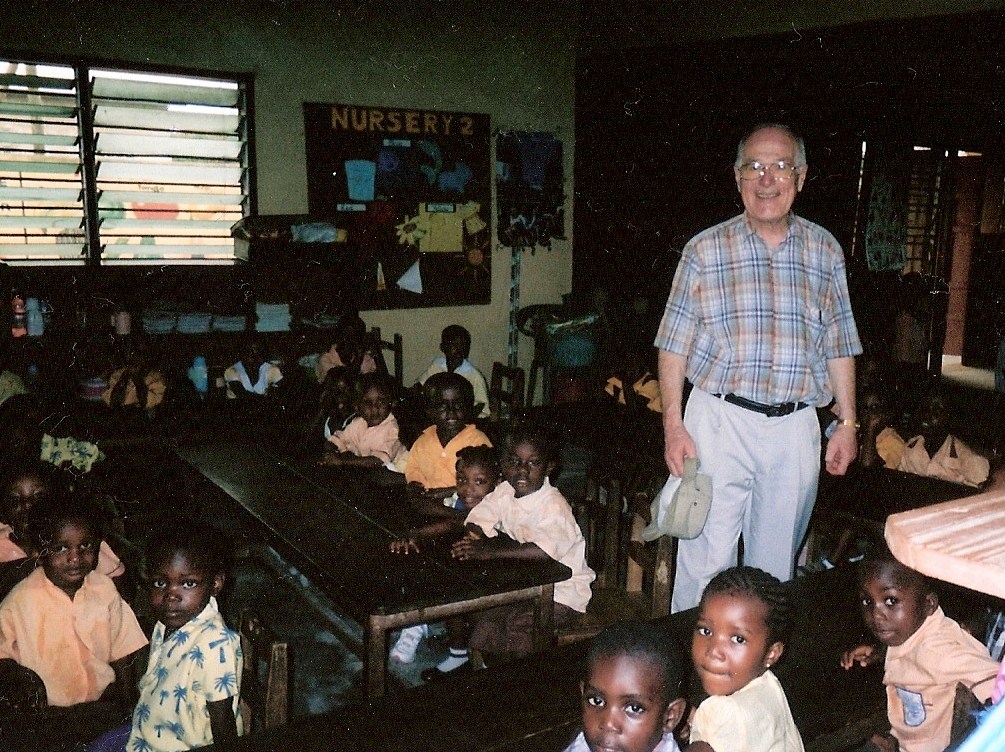
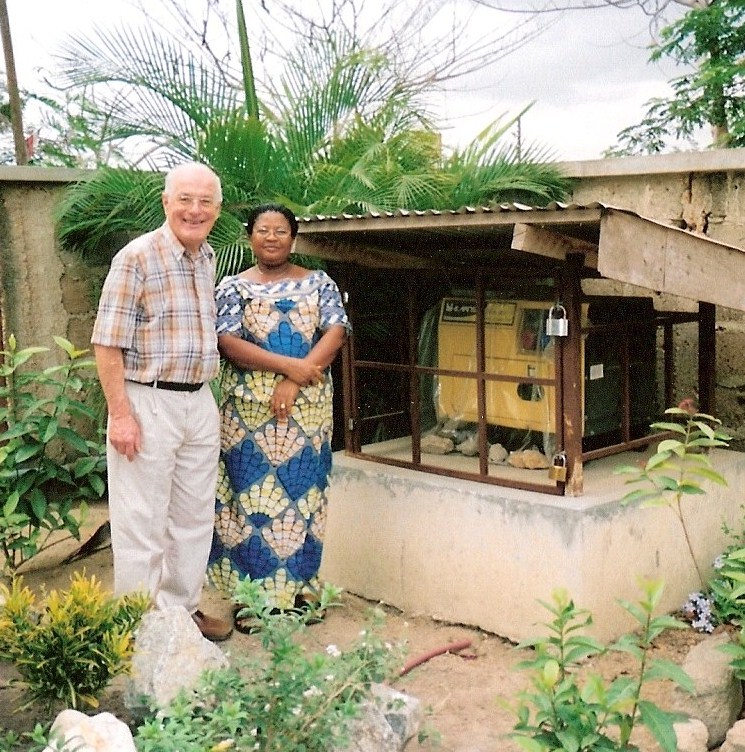
The school was built after founder Dave Mustill saw a group of children being taught in the shade of a nim tree in the fishing village of Nanyano, on the coast near Winneba.  As he worked for British Airways, Dave called on his colleagues to help raise funds to build a school.  This was opened in Kasoa in 1996, with 7 children.  It now educates well over 500 children and has a long waiting list.  This is a private initiative, clearly answering a great need, which Ghana School Aid has been happy to support on several occasions.  The main funding now comes from the Hartley Trust.  The pictures show Ted Mayne, Chair of GSA, on a visit to the school in 2009.  Note the new electricity generator!


UPDATE    July 2015.  Following David Mustill’s request at last year’s AGM, we sent a grant of £650 for the replacement of a generator.

Sandema Educational Resources Centre

In 1993 a young Ghanaian teacher invited his former university lecturer in the U.K. to visit his village, Sandema, in Ghana’s Upper Eastern Region.  That led to the founding of the Sandema Educational Resources Centre in 1997.  Since then generous donations from thousands of well-wishers in Britain, combined with the devotion of teachers in Ghana, have created a unique partnership and an institution, where, for the first time in their lives, women, men and teenagers can acquire, free of charge, practical and academic skills.  Ghana School Aid has been happy to support the Sandema charity on several occasions.  See also the Sandema website.

UPDATE MARCH 2013The Children’s Centre provides food, shelter, clothing and medical care to orphans and needy children in Sandema and its surrounding villages.  It also covers all education costs (fees, uniforms, books, school supplies) for the children at the Centre.  GSA has awarded it a grant to fund scholarships for girls to enable them to continue their education through secondary school, covering the cost of admission and school fees for one year.

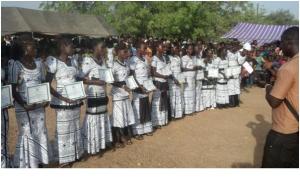
UPDATE MARCH 2016  GSA committee member Patrick Heineke is an ardent supporter of Sandema and spends much time there.  He writes:  “This wide-ranging community project is now 20 years old.  The radio station is a key element, but has had problems with fluctuations in electricity supply and ever-increasing costs.  The mango-seedling project is going ahead well.   A group of young women recently graduated from the weaving and sewing school (see picture below).  UNICEF sponsors a maternal and child health project.  The Library is as busy as ever.  Some guest chalets may bring in some income.  A German charity has agreed to supply solar energy equipment, but it is up to the project to fund the installation.”  Patrick submitted a bid to GSA for a grant towards the cost of renovating the staff house/store room, and replacing some of the radio station equipment that was recently stolen.  £750 was agreed.

Patrick in the Sandema shop:Patrick in the Sandema shop

Seventeen girls pass out in weaving and dress-making:

Sandema ceremony

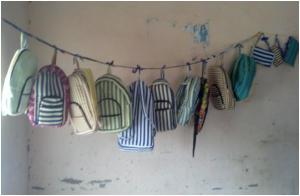
Handbags made of home-woven cloth:

craft handbags

Dignitaries at the passing-out ceremony, 2015:

dignitaries at ceremony

UPDATE  February 2017  There is exciting news in Sandema:  after much negotiation, the Centre has been given 22 solar panels to power the radio station on the many occasions that the mains electricity supply fails.  When they arrive from Germany, there will be significant customs, transport and installation costs.  GSA has agreed a grant of up to £2000, to be paid when the actual costs become clearer.


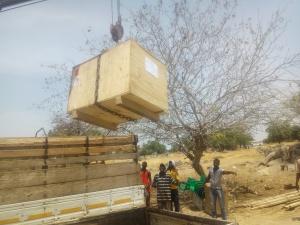
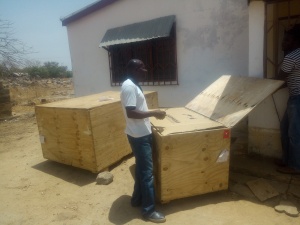
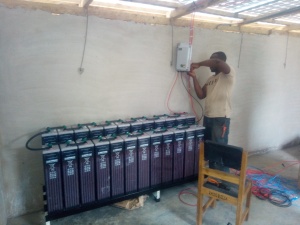
UPDATE  May 2017  We learn that the solar panels are not only installed, but up and running.  It has been a long saga, with 22 solar panels and batteries being provided by a German charity and transported to Ghana, taking 3 weeks and involving the construction of a building on which the panels are mounted, getting sulphuric acid for the batteries from Kumasi, and finally connecting up.  The installation is now powering the radio station from 5am to 10pm.  The remaining issue is security for which 24-hour CCTV monitoring is planned.  Hearty congratulations to all involved for their effort, their generosity and their perseverance.  The radio station unites, educates and entertains over a wide area.


Yendi Girls’ Junior High School

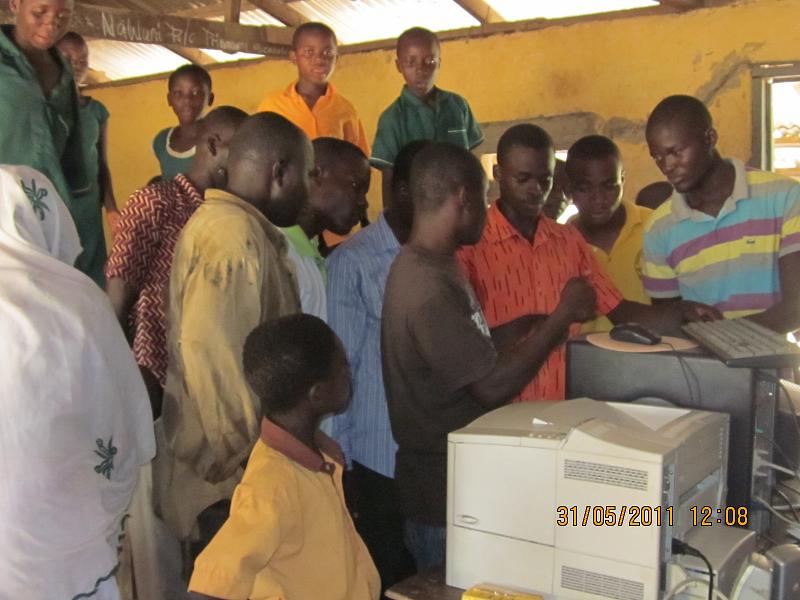
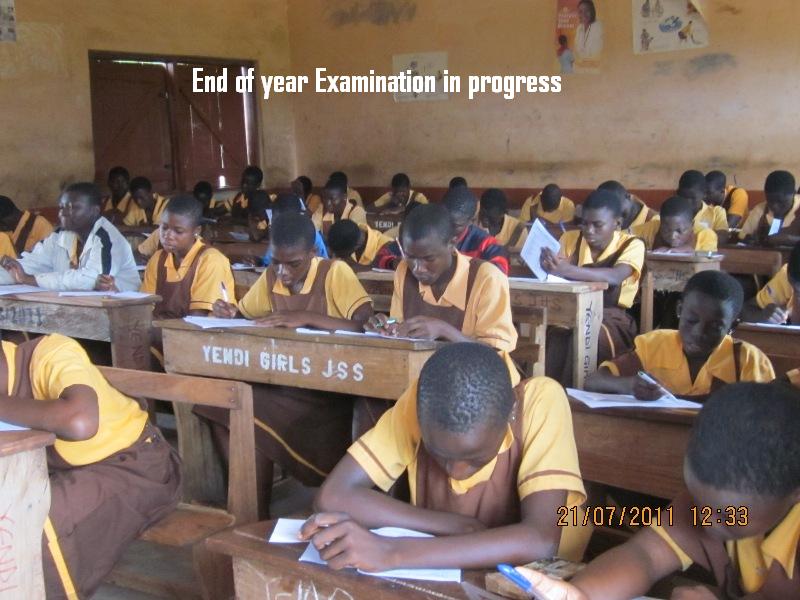
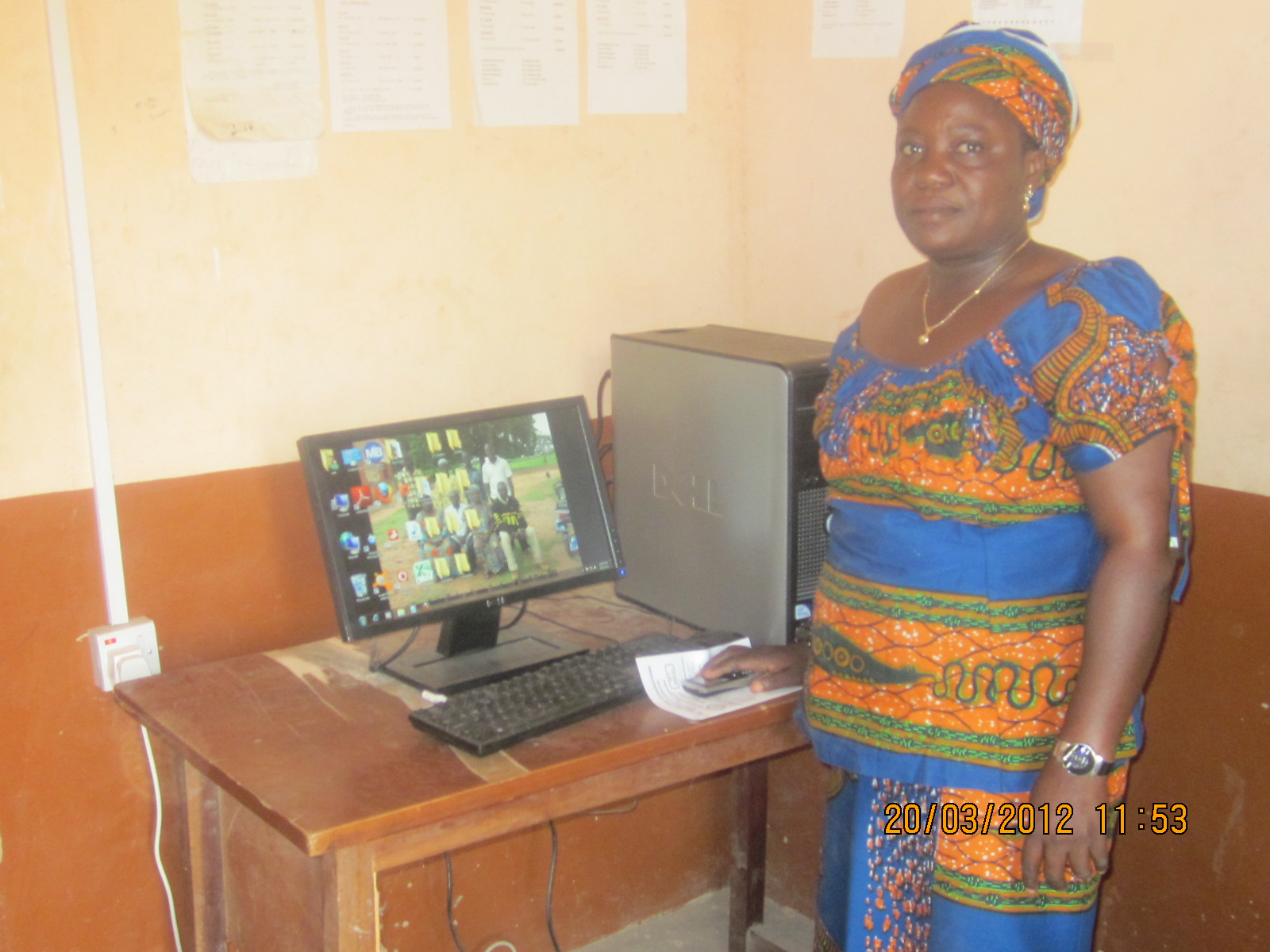
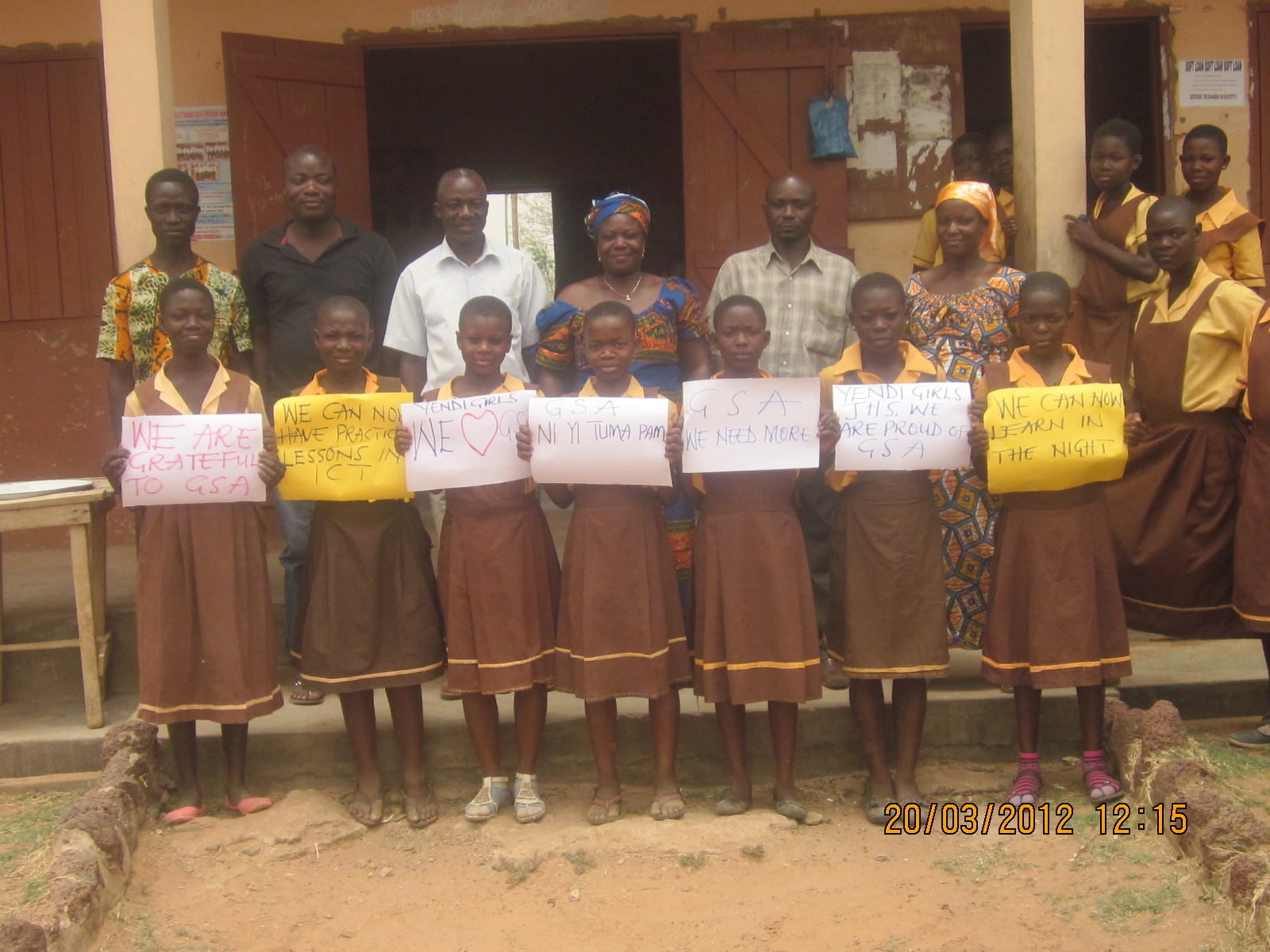
GSA provided a grant for an electrification project.  Alhassan Salifu Baako, GSA’s project Coordinator in the North organised a meeting at the school to ensure that the project would be carried out efficiently.  All the classrooms, the staff common room, the headteacher’s office and the outside walls were connected with electricity.  The school has a great potential to grow.  the Municipal Assembly has added a new block to the school which is still under construction.  Students from Yendi Girls’ and other schools in the neighbourhood can now work in the evenings.  Teaching and learning of ICT and use of audio visual teaching materials are also possible.  The school’s PTA paid for a watchman in order to maintain security.  Baako visited Yendi Girls’ JHS on 20th March 2012 to see the final work of their project.  “Quality work was done from what I saw.  I was warmly received by the entire school.  I was given copies of the receipts and the headteacher’s letter of appreciation.”

UPDATE MARCH 2013  The two pictures show a teacher (Head teacher perhaps) standing beside ICT equipment in use, and girls with placards which read:  “We are grateful to GSA” “We can now have practice lessons in ICT” “Yendi Girls – we love GSA” “GSA Ni yi tuma pam” “GSA We need more” “Yendi Girls – we are proud of GSA” “We can now learn in the night”.  Right on, Yendi Girls, we’re delighted to have your messages!

yendi elec 3

yendi JHS electricity 1

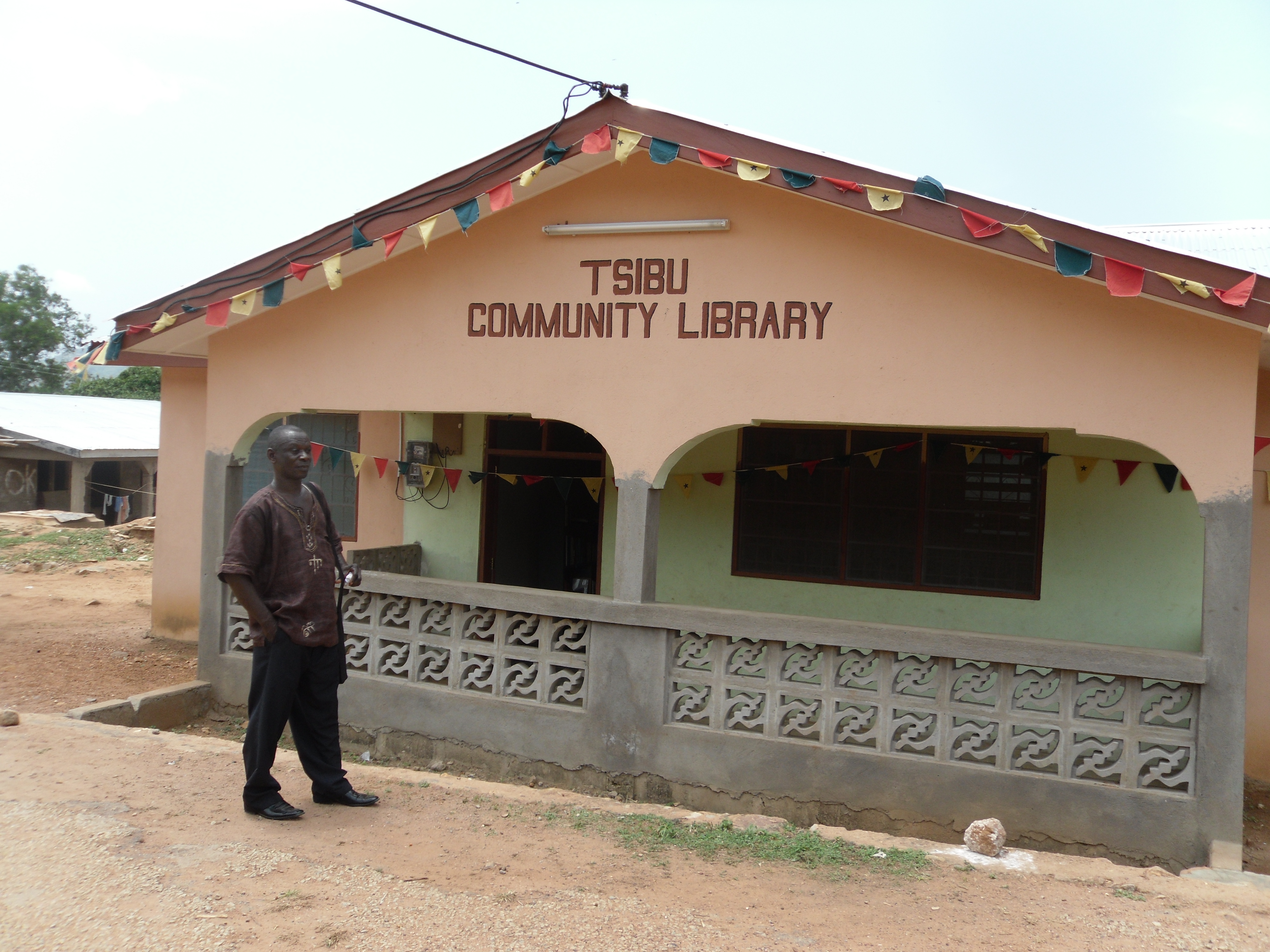
Tsibu Library

The library has been built from scratch on the initiative of a UK-based Ghanaian from the village of Tsibu-Awudome.  It is a solid building with good security and is staffed on a regular basis.  It serves the villages of Bethel, Daffor and Tsibu.  It has a fair collection of books and newspapers, but is always grateful for more books suitable for both schoolchildren and adults.  GSA has contributed to the purchase, in Ghana, of computers which are now installed.

Signed:  Penny Sewell

Joe Bedu L.A. Primary School

Joe Bedu hailed from Dafor-Awudome in the Volta Region, and when he sadly died in 2004, the villagers named their Primary School after him.  Joe’s widow, Penny Sewell, plus a network of friends, have supported the school ever since.  Ghana School Aid has been of immense assistance, giving funding to help with:  building a six-cubicle pit lavatory (Kumasi Ventilated Improved Pits); re-establishing electric cables (stolen years ago), thus enabling the school to be lit up again;   installing pipes bringing water to four standpipes on the school compound;  providing funds for classroom conversion and for making burglar-proof a computer laboratory;  supporting the J. Bedu Day-care Centre for toddlers..  The funding received was added to what Penny had raised separately, hence the impressive list of projects.  The school roll has increased hugely in recent years, and the school is unrecognisable compared to what it was in 2004 – it is now a force to be reckoned with.

Signed:  Penny Sewell

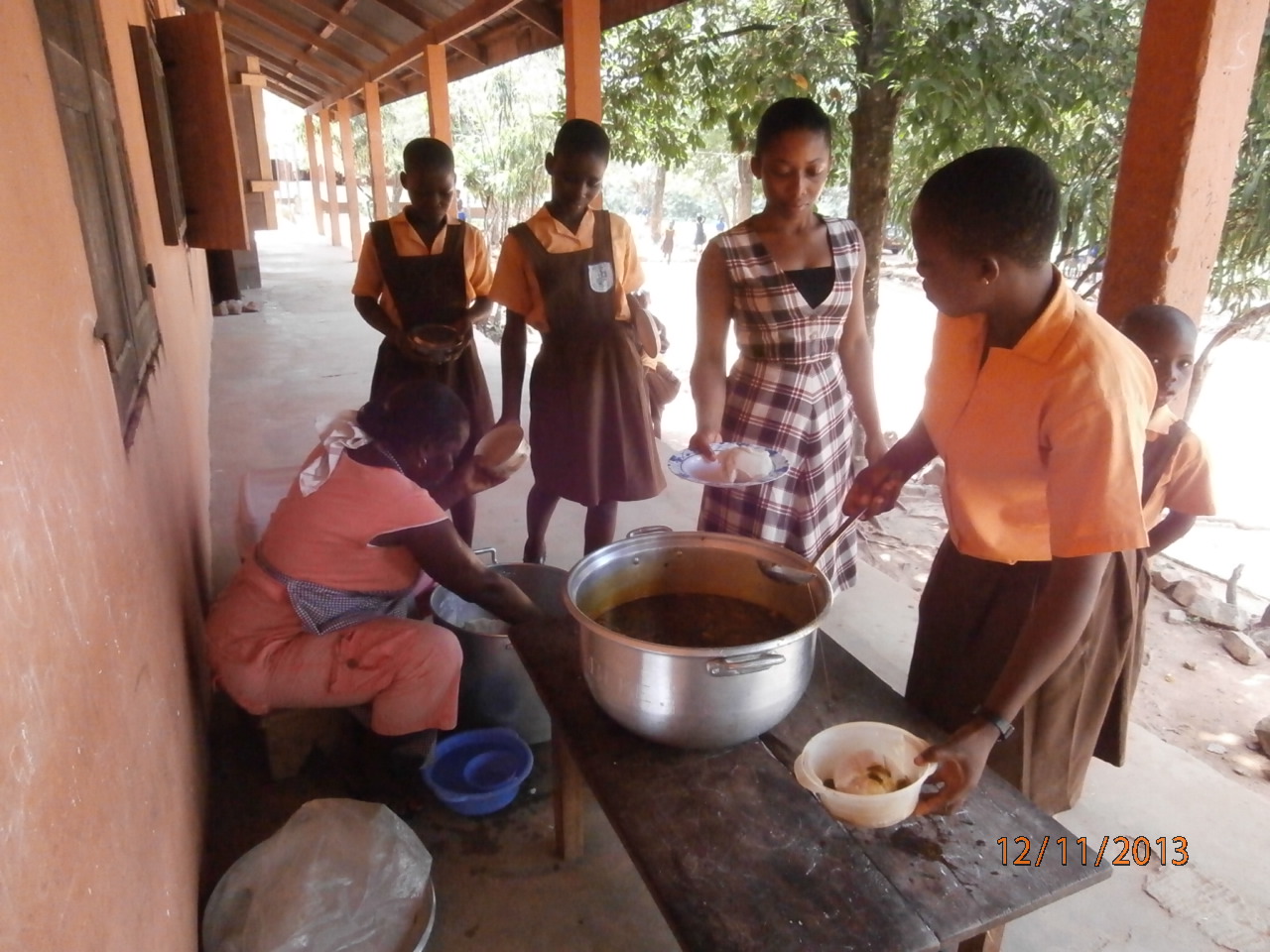
UPDATE  NOVEMBER 2013       Penny visited the school every day for 10 days in Nov. 2013, and writes:  “The J.Bedu school gave me a wonderful welcome.  In Junior High 1, 3 students out of 15 had difficulty reading a couple of sentences aloud to me.  When I mentioned this to the teacher later, she erupted with joy, which perplexed me a little.  It transpired that this represents major progress, competence in English being one of the students’ goals.  The incident was a timely reminder of realistic aspirations for the school.   //  Cousin Grace has a contract with the Local Authority to provide a midday meal for 2 primary schools .  She sources all the ingredients and employs 3 women who come to her house each weekday to cook.  Incredibly, food is provided for 500 people, including teachers, and the programme has done much to increase attendance rates and improve health and learning.  //  I saw the beautiful desks and chairs bought with last year’s grant.  They cannot be installed until the classroom is made secure and I imagine the committee will spend part of the 2014 grant on that.   //  The big question exercising all our minds is how to install computers in the room designated “computer lab”.  The first step is to install wrought iron grills on windows and door.  We can then seek to obtain some PCs (laptops are more likely to be stolen).  A trusted Ghanaian friend has 10 years’ experience of installing computers in schools.  He says that, once installed, they can be maintained by charging students 50 pesewas for each lesson.  They system has worked well in many schools.  The cost of making the lab secure and installing 25 PCs would amount to £4000.  Generous friends have allowed me (in Jan 2014) to send £1000 for the work to start, and we will take it from there…

Although I observed a definite rise in standards in Ghana, in terms of dress, vehicles and aspirations, there is still a great deal of poverty, which explains the need for security.  The school is doing well but much more work is needed to help the children bridge the huge gap between rote-learning and real life.  This implies the availability and good use of text books, in-service training for teachers, and strong leadership.

In the next year or so the Eastern corridor road from Accra to the North will come into service:   it passes in front of the school and will bring changes to Dafor.  I asked JH3 (the top class) about those changes, but my question met with silence.  Why?  I can only think that the topic wasn’t on the syllabus and there had been no discussion either in the village or the school about the road’s impact.  The challenge at this level is to think “outside the box” – let life into the syllabus.  Who in the school can pick up that challenge?  //  I left 19 library story books, a volley ball (great acclamation for that!), 10 big sleeping mats for the little ones, 3 syllabus books, 20 little chairs, 2 bowls and 2 water-barrels.  Also pens and pencils for the children and a small cash gift for each member of staff.  They were clamoring for football shirts and short, but funds did not stretch that far.

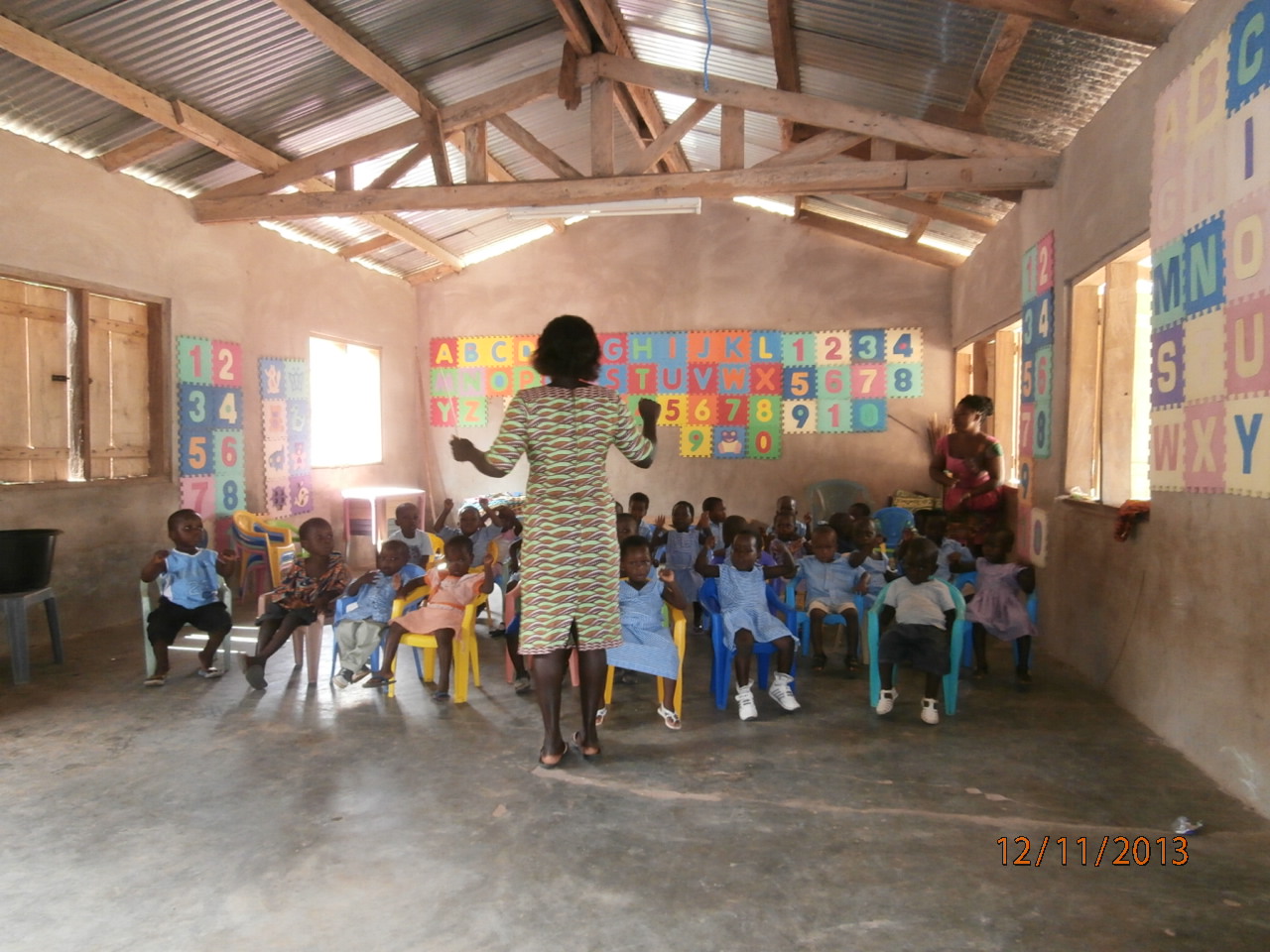
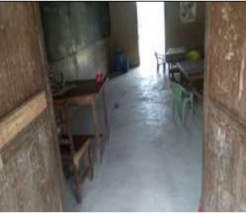
The Day Care Centre is flourishing, with high enrolment and, on the whole, happy children.  The room they use is nicely decorated  with letters and numbers.  There’s a lot of reciting and singing – I didn’t see any games being played and the toys were in a chest only brought out on Fridays.  Forgive me, teachers, if I have got that wrong, but also, teachers, please make more use of the toys you have. //  I discovered that the DCC and the KG children are too small to use the pit lavatories that we provided.  (Which, by the way, are much appreciated.)  They were creeping into the bushes with their little bits of toilet paper.  I had a good discussion with the Chair of the Parent-Teacher Association which intended to build special cubicles (pits with small seats) for the little ones.  I left a personal gift to help them complete that project.

It is always rewarding and exhilerating to share in the life of the school which is growing in stature and about to face some big changes and opening-up to the outside world.  See the pictures below.

OLYMPUS DIGITAL CAMERA The KG classroom

OLYMPUS DIGITAL CAMERA

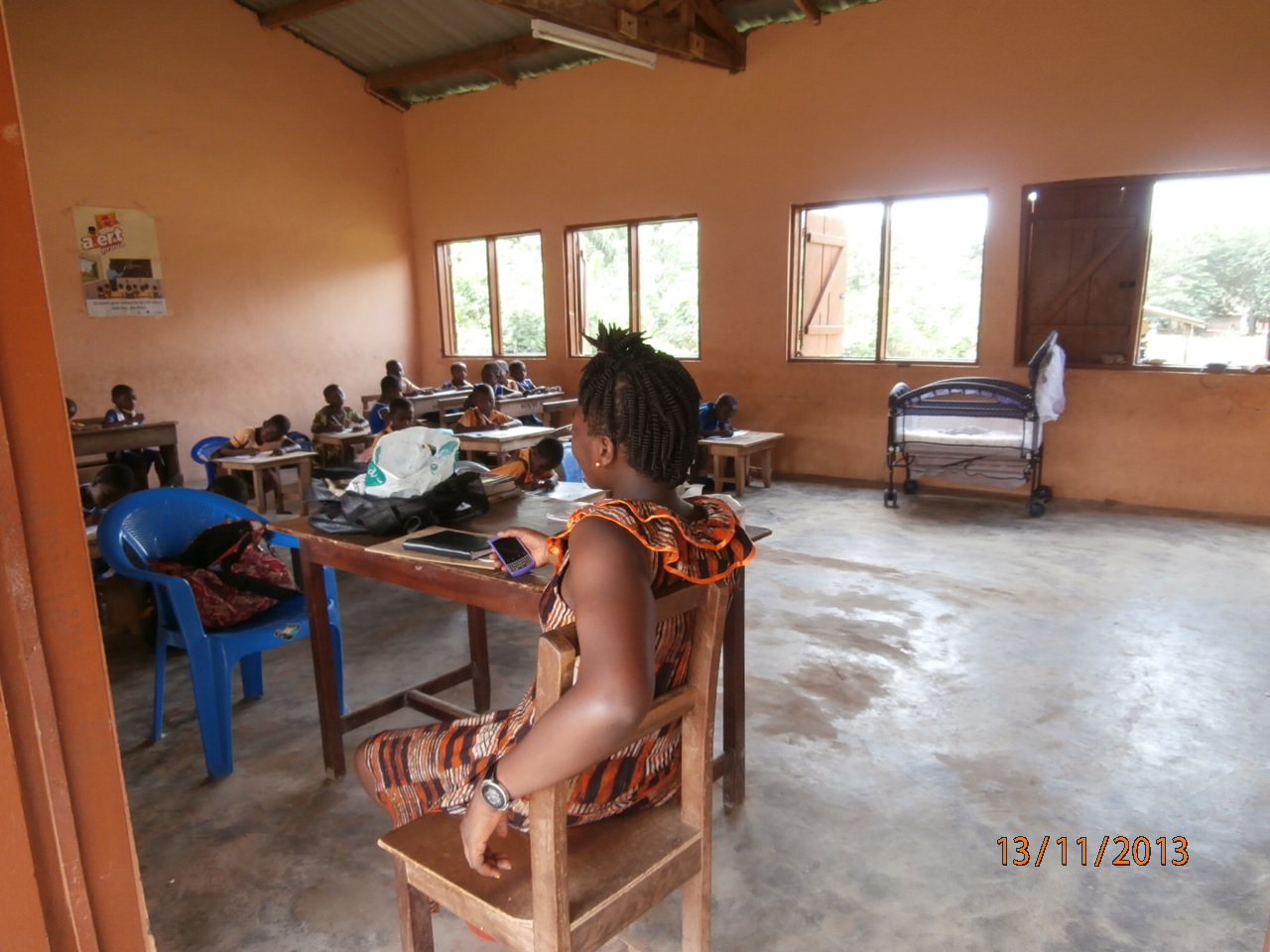
A new classroom complete with cot for the teacher’s baby

OLYMPUS DIGITAL CAMERAServing a school dinner

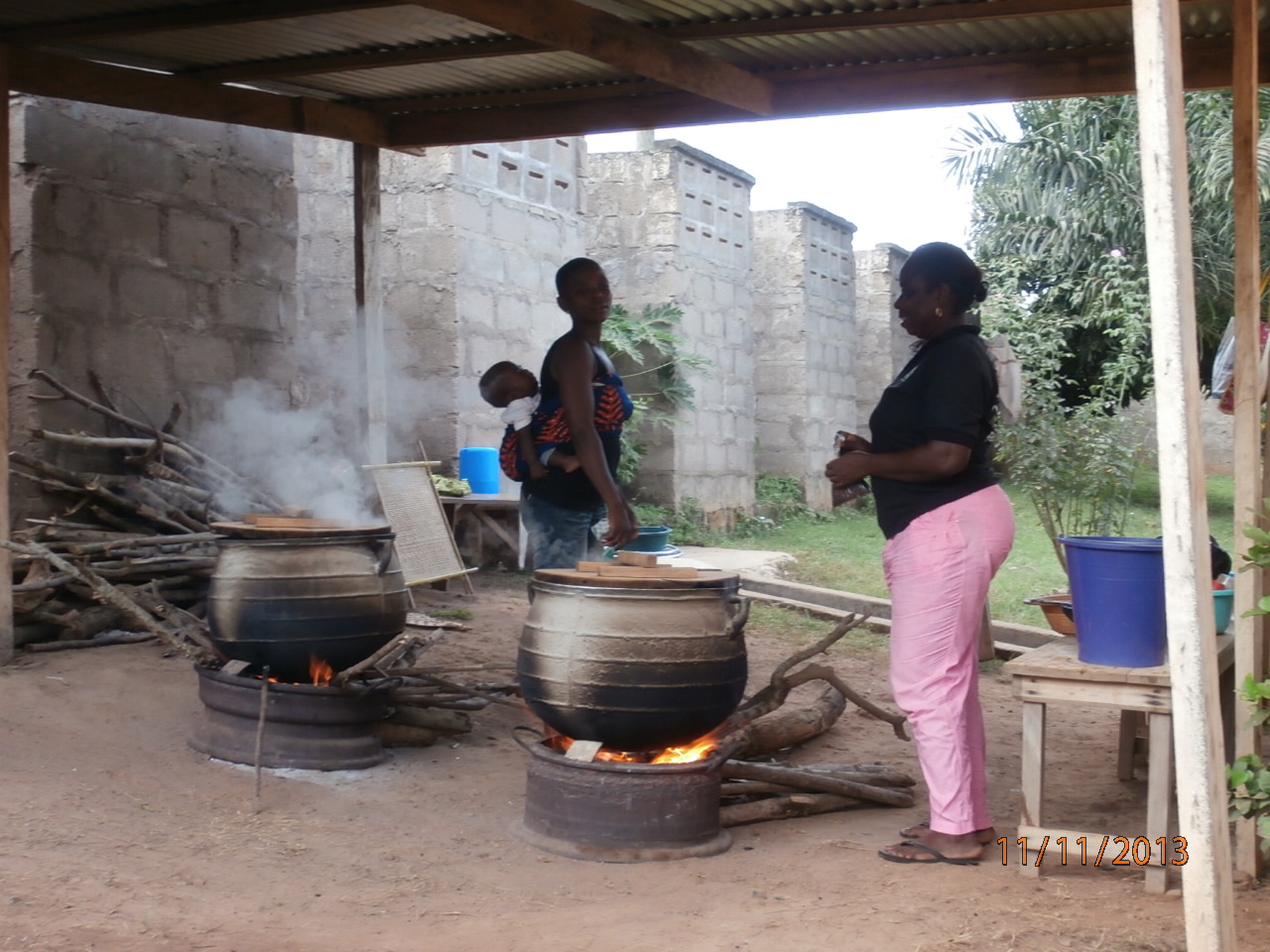
OLYMPUS DIGITAL CAMERASchool dinner cooking

OLYMPUS DIGITAL CAMERA

PTA members with Penny, and the acting Headteacher and her deputy.

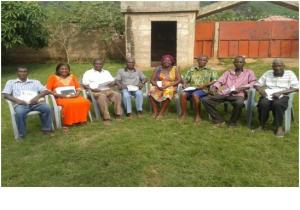
UPDATE MARCH 2016  Thanks to the generosity of friends, and the great help of GSA, the school has completed the new corridor outside the JHS block (see picture), which will make life a lot more pleasant for everyone using those rooms.  The school continues to get good results at BECE level, with students gaining places in secondary schools.  Class sizes in the Kindergarten and the Primary school are 30+, and about 15 in the JHS. Six student teachers from the Peki College of Education join the staff for one year each year and play a significant role in the school.  The picture below shows the Committee which administers funds from GSA and the J. Bedu Memorial Fund.

JHS corridor Joe Bedu Fund committee

UPDATE  February 2017  A special appeal was launched by Penny to help this school and the Cambridge-Bethel Schools, an appeal adopted by GSA as its 30th anniversary appeal.  A total of £5410 was raised, most of which was eligible for GiftAid.  This GiftAid is shared between the appeal and general GSA funds, yielding some £550 for each.  The aim of the appeal for this school was to enable it to resurface badly damaged classroom floors and to connect the new staff bungalows to the national grid.  These two projects have been completed in record time, and the new Headteacher, Mr. Maxwell Pekyi is bowled over, realising how much his school has benefited from our support over the years.  Warm thanks are due to all who supported this initiative financially, to Robert who supervised the work, and to the workers.  The new floors look marvellous!